HomeStage 3 · In the fieldSwimming and water rescue guide
By Global PrepperUpdated 4 official sourcesHow we make the guides
Stage 3 · Swimming and water rescue guideWater: float, reach and cross wisely
You can lose your life in water within minutes. Three skills lower the risk: floating without panic, helping another person without going into the water and crossing a river only when it can be done safely.
- Float first, swim later: head back, ears in the water, breathe calmly.
- Reach or throw, don't go in: a stick, a rope or anything that floats.
- Deep, cold or fast river: do not cross. Wait, turn back or find another place.
- In water below 15 °C (59 °F) cold shock can take your breath away within seconds.
Floating is the first thing
If you fall into the water or a current drags you, fighting it wears you out. Floating buys you time to breathe, calm down and call for help. In water below 15 °C (59 °F), cold shock can take your breath away in seconds: do not move until it passes.
- Head backTilt your head back, with your ears in the water and your chest up.
- Breathe calmlyTry to breathe normally. Fighting the water tires you out faster.
- Move your handsMove them gently to stay afloat.
- Spread your arms and legsSpread them for stability. If your legs sink, that is fine: every body floats differently.
If a rip current carries you away from shore, do not swim against it. Float, signal with your arms and swim parallel to the shore; when the current weakens, head back at an angle.
The video teaches floating on your back.
Reach or throw, do not go into the water
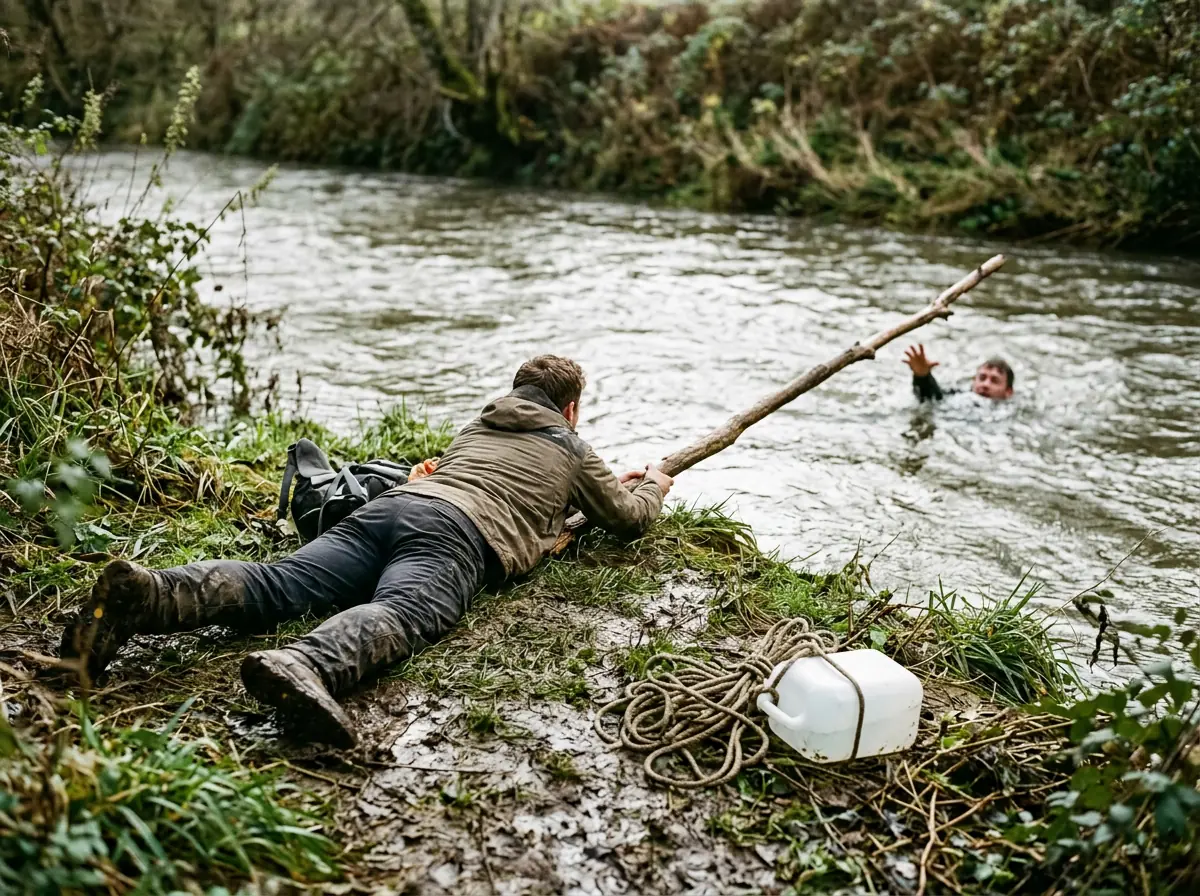
Anyone who goes in to rescue without training can drown too: the water may be deeper than it looks, and the person heavier, and they may cling to you in panic. Someone who is drowning makes almost no noise: head tilted back, mouth almost level with the water, unable to shout or wave.
- Call for helpShout so someone comes and call emergency services, or ask someone else to do it.
- ReachFrom solid ground, brace your body and extend a stick, a branch, an oar or a towel. When they grab it, pull slowly, keeping your body low and leaning back.
- ThrowThrow something that floats, ideally tied to a rope: a sealed jug, a cooler, a life jacket. Toss it a little beyond the person and pull the rope in gently.
- AfterwardIf they swallowed water, have a doctor check them even if they look fine.
Only someone with water-rescue training should go into the water. If you cannot reach or throw, or the person is underwater or motionless, call emergency services right away.
Crossing a river: decide before you enter
Crossing a river on foot is among the most dangerous things in the field. If the water is high, cold or fast, do not cross: wait, turn back or find another place. Never cross above rapids or waterfalls.
- Choose the spotA straight stretch between two bends, wide and shallow. Avoid water deeper than your knees, and check first what lies downstream and where you would get out.
- Test the currentThrow a stick upstream: if you cannot walk as fast as the stick moves, the current is too strong.
- Prepare your packUndo the hip belt and the chest strap so you can shed the pack if you fall. Put dry clothes and essentials in waterproof bags, and cross with your shoes on.
- Cross sidewaysLook upstream and move diagonally downstream, sliding your feet sideways with two points of support: both feet, or one foot and a stick.
If you fall, let go of the pack: it can flip you face down or drag you. A pack can be replaced; you cannot.
In a group, the strongest person goes a little upstream to break the current. The video shows how to judge a river and cross it.
Check what you already have
0 of 5 · Saved only on this device.
- Going into the water to save someone without training.
- Fighting the current instead of floating.
- Crossing a river with the pack buckled.
Sources: American Red Cross · Reach or Throw, Don't Go · American Red Cross · rip currents · RNLI · Float to Live · US National Park Service · safe river crossings