HomeStage 3 · In the fieldFishing guide
By Global PrepperUpdated 1 official sourceHow we make the guides
Stage 3 · Fishing guideFishing: hook, line and bait
A hook, a few meters of line and the right bait are enough to pull food out of the water. Learn where to look for fish, how to build the gear from what you have and how to fish without a rod.
- Look where fish hide: deep pools, eddies beside rocks and under branches.
- They feed more before a storm; after it, with muddy, swollen water, they hardly feed at all.
- Use what the fish already eat in that place as bait.
- Ask before you fish: in many places you need a license.
Look where fish hide
Fish look for shelter and food: they are not just anywhere in the water.
- Deep poolsIn a river, deep pools hold fish.
- EddiesBeside a rock in the current, calmer water forms where fish rest.
- Under coverOverhanging branches, sunken logs and plants give them shade and shelter.
- Pick your momentBefore a storm they often feed heavily. Afterward, with muddy, swollen water, they hardly feed. At night, light attracts fish.
Ask before you fish: in many places you need a license or permit, and there are closed seasons and protected species.
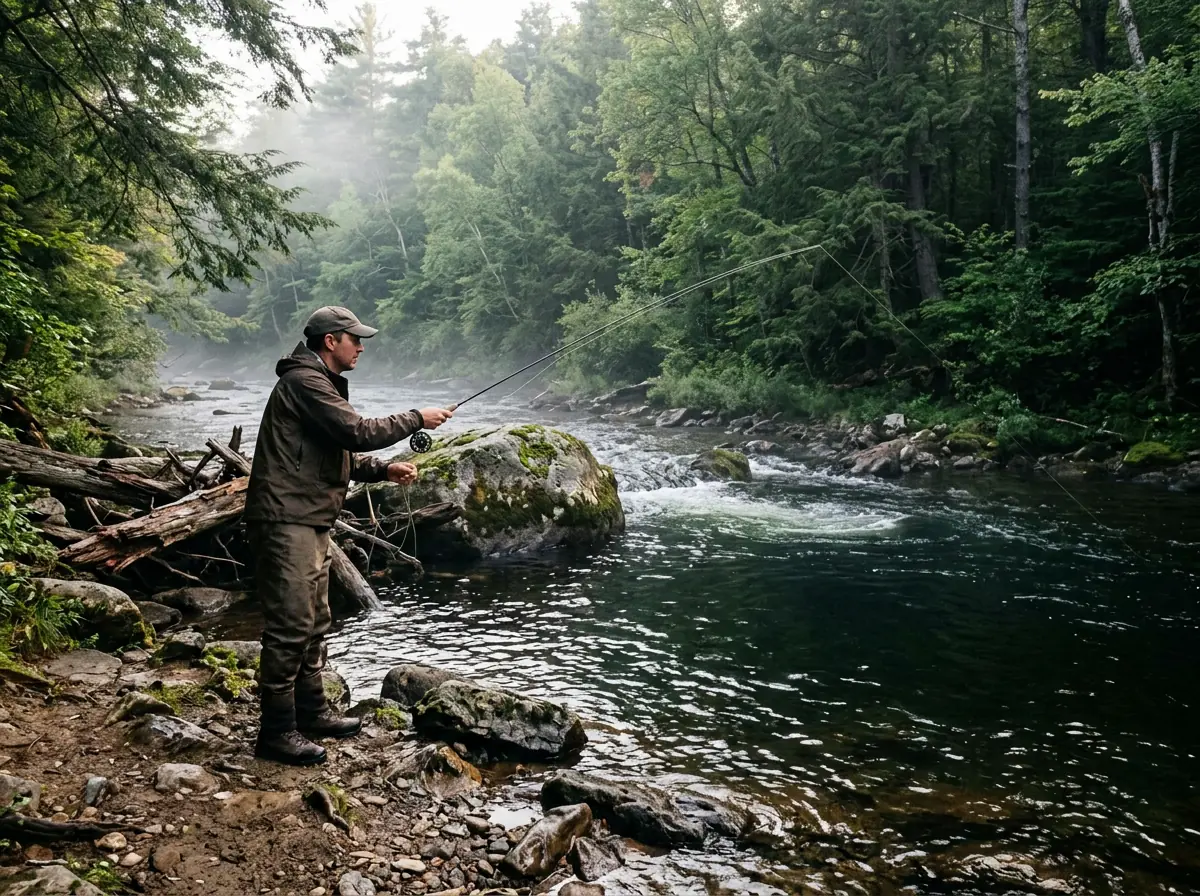
A hook, a line and bait
If you have no gear, you can make it: a hook can be made from pins, needles, wire or small nails, and also from wood, bone or thorns.
- The hookBend a piece of wire or a small nail into a J shape and sharpen the point.
- The lineStrong thread, thin cord or the inner strands of a paracord.
- The knotTie the hook with a knot that will not slip, such as the palomar (video), which works for hooks with an eye.
- The baitUse what the fish already eat in that place, such as worms or insects, and cover the hook with it.
- The gorge hook: a rod sharpened at both ends, with a notch in the middle for the cord and the bait set lengthwise. Do not pull on the first tug: wait for the fish to swallow it.
The video shows the palomar knot.
Fish without a rod
If you have no rod, you can fish with the line in your hand or leave several lines set in the water while you do something else.
- HandlineHold the line with your fingers to feel the tug and pull it in by hand.
- StakeoutStick two flexible poles in the bottom and stretch a cord between them, just below the surface. Hang several baited hooks or gorge hooks from the cord, without letting them tangle.
- Check it oftenLook at your lines frequently and take the fish out right away: it spoils fast, especially in the heat.
Fish only with a hook or line, unless you know another method is legal: poison and nets damage the water you depend on and are banned in many places.
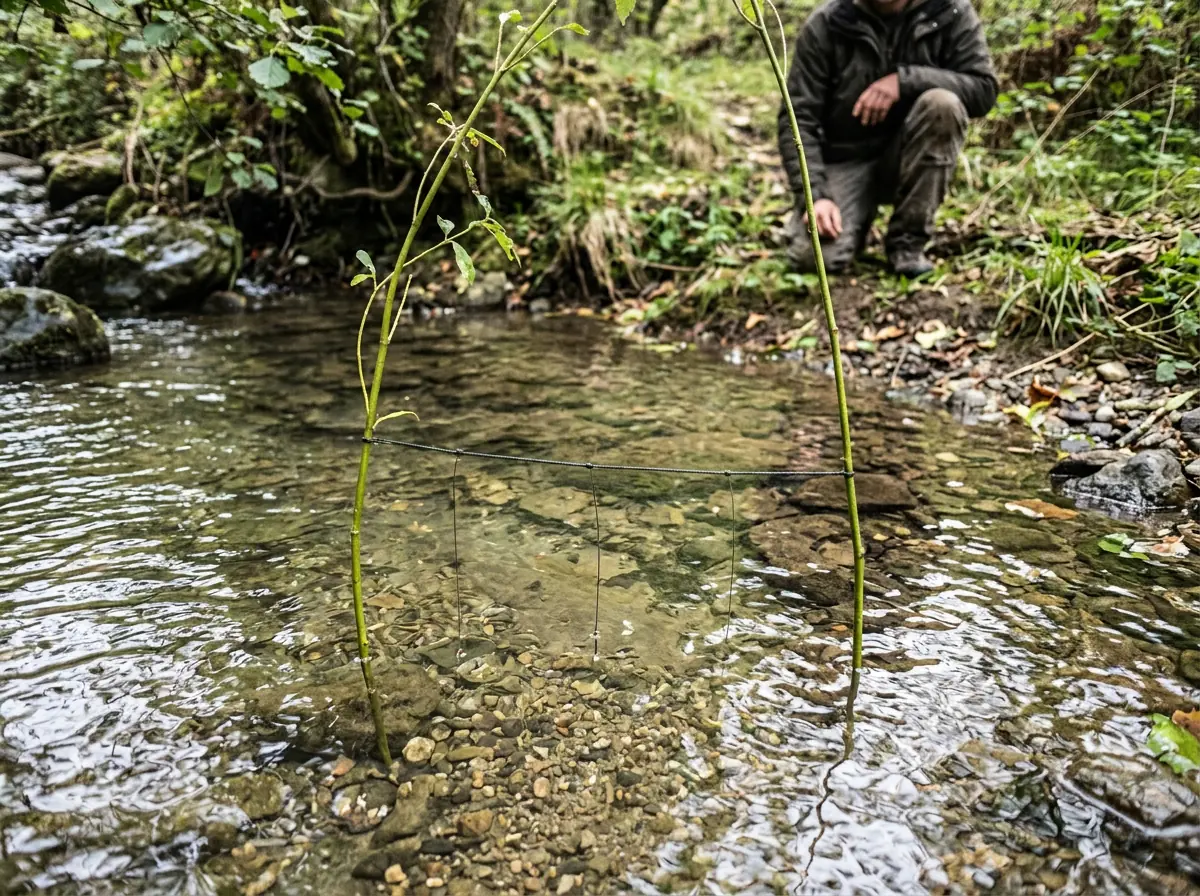
Check what you already have
0 of 5 · Saved only on this device.
- Fishing without knowing whether a permit is needed or there is a closed season.
- Yanking the gorge hook on the first tug.
- Leaving fish in the sun: it spoils fast.