HomeStage 3 · In the fieldReading the weather guide
By Global PrepperUpdated 5 official sourcesHow we make the guides
Stage 3 · Reading the weather guideWeather: watch the sky before it changes
In the field, a change in the weather can be seen coming if you know how to look. Learn to read clouds, to decide when to go out and to react if a lightning storm catches you.
- Clouds that grow upward like towers can turn into a storm.
- When you hear thunder, take shelter in a solid building or a hard-topped vehicle.
- An isolated tree or a tent will not protect you from lightning.
- Wait 30 minutes after the last thunder before going back out.
Read the clouds
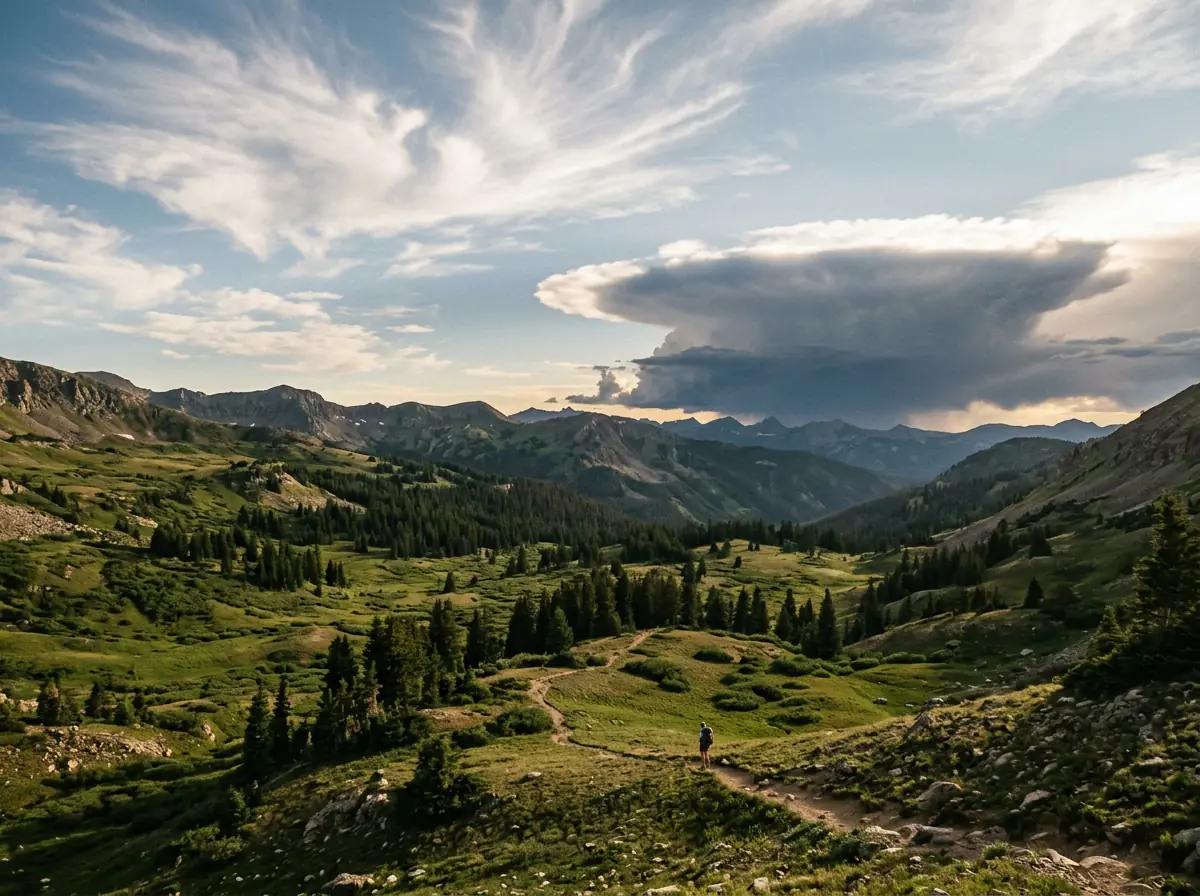
Clouds warn you about the weather to come. Look at their shape and height. Cirrus, white wispy threads very high up, do not bring rain, but if they multiply and thicken they warn of a change in the weather.
In the mountains, storms usually form in the early afternoon: start early and be back down before noon.
Decide with forecast and sky
- Check the local forecastThe one for the place you are going, not the one for your home: it can be different.
- If the storm risk is high, do not goStay somewhere safe and go another day.
- Watch the skyCumulus that grow taller through the morning, or ragged clouds pushed along by the wind, warn of bad weather.
- Have a shelter planBefore you start walking, think about where you would take shelter and how long it takes to get there: a solid building or your vehicle.
Lightning can strike more than 16 km (10 mi) from the storm. At the first thunder do not wait for rain: take shelter.
If the storm arrives: lightning and flash floods
In a lightning storm, no place outdoors is completely safe. The only safe places are a solid building or a vehicle with a hard top and the windows closed.
- Take shelterIn a solid building or a hard-topped vehicle. A tent, a hut or an open roof will not protect you.
- If there is no shelter, go lower and spread outLeave ridges, summits and open ground; stay away from water, wire fences and isolated trees. In a forest, stay near lower trees. In a group, spread out.
- Wait 30 minutesCount from the last thunder before going back out.
Do not lie on the ground or hold long metal objects, such as a fishing rod or an umbrella.
- After the rain, rivers rise and turn muddy: do not cross a flooded river.
Check what you already have
0 of 5 · Saved only on this device.
- Walking on toward a summit or ridge when thunder is heard.
- Taking shelter under an isolated tree or in a tent.
- Heading out late into the mountains when there is a storm risk.
Sources: NOAA · cloud types · US Army survival manual · appendix H, clouds and weather · US National Weather Service · lightning safety · US National Weather Service · lightning outdoors · CDC · lightning safety