HomeStage 3 · Your healthFractures, burns and moving an injured person: what to do until help arrives
By Global PrepperUpdated 6 official sourcesHow we make the guides
Stage 3 · Fractures, burns and moving an injured person: what to do until help arrivesFractures, burns and injured people: immobilize, cool and do not move more than needed
A broken bone, a burn or an injured person in danger cannot wait. Three steps: immobilize, cool, and move only if you have to.
- Fracture: immobilize it as you found it and do not set the bone.
- Splint: it should cover the joint above and the joint below.
- Burn: cool running water for 10 to 30 minutes; no butter and no ice.
- Neck or back: do not move the person unless there is immediate danger.
Immobilize the fracture: splint and sling
- The wound firstIf it is bleeding, press with a clean cloth. If there is an open wound, rinse it and cover it before splinting.
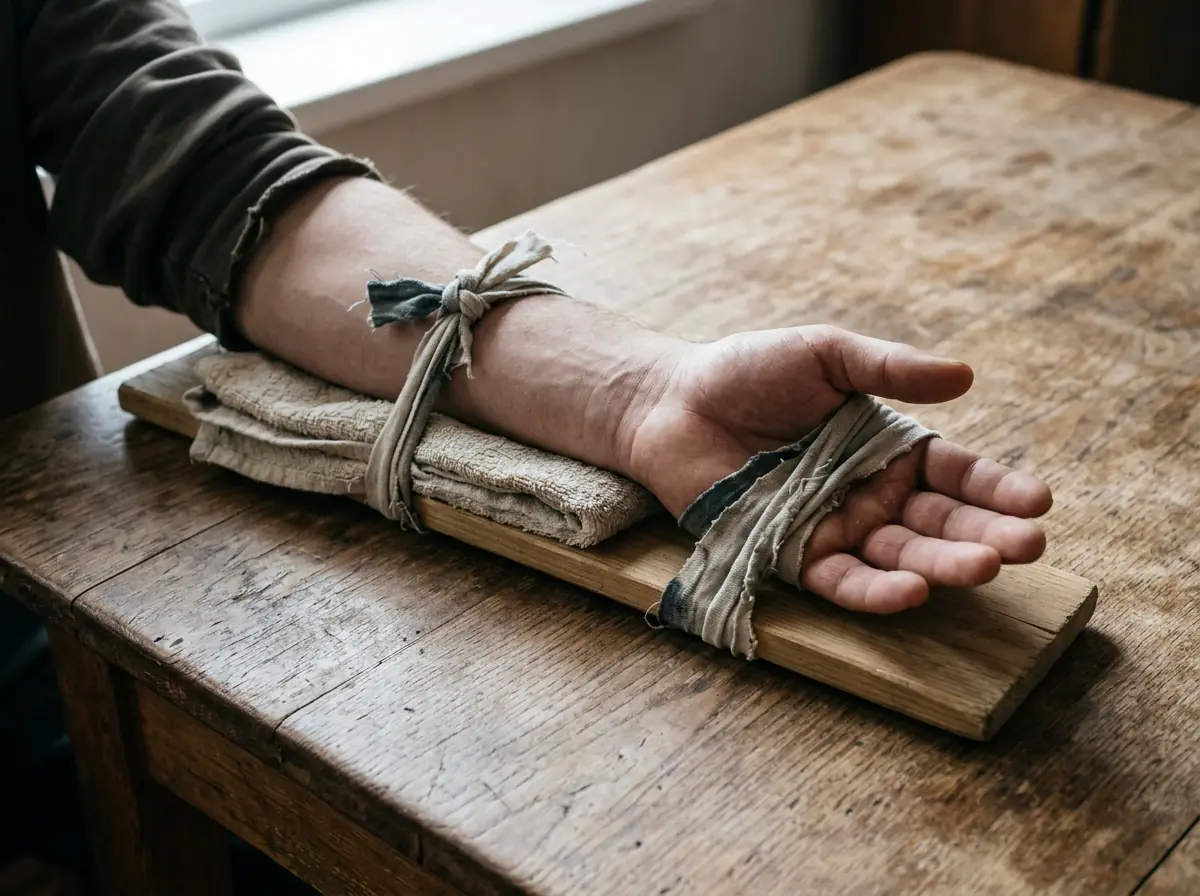
- Make the splintA board or a stick, padded with cloth, that spans the joint above and the joint below. With nothing rigid, a blanket or rolled-up clothing will do.
- Tie it without squeezingWith strips of cloth or a belt above and below, with the knots away from the injury. If there is swelling, paleness or numbness, loosen it.
- SlingFor the arm, elbow or collarbone: a triangle of cloth tied at the neck, with the hand higher than the elbow. A long-sleeved shirt will work.
Do not set the bone or push an exposed one back in. If you see bone, there is heavy bleeding or the fingers turn blue, call emergency services.
Burns: cool with water and cover
- Cool itCool, not ice-cold, water over the burn for 10 to 30 minutes. On the face, a cool, damp cloth.
- Remove what is tightRings, bracelets and tight clothing before it swells. Do not remove clothing that has stuck to the skin.
- Cover itWith gauze or a clean, loose cloth. Do not pop the blisters: they protect against infection.
- No home remediesNo butter, oil, toothpaste or ice on burned skin.
Call emergency services if it is larger than your palm, white, charred or dry, is on the face, hands, feet or joints, or was caused by electricity, a chemical or smoke. If it is serious, cover it with a dry cloth and do not use cold water.

Moving an injured person: only if staying is worse
- Do not move themIf they fell from a height or hit the head, neck or back, or feel severe pain, weakness or numbness there: moving them can leave them paralyzed.
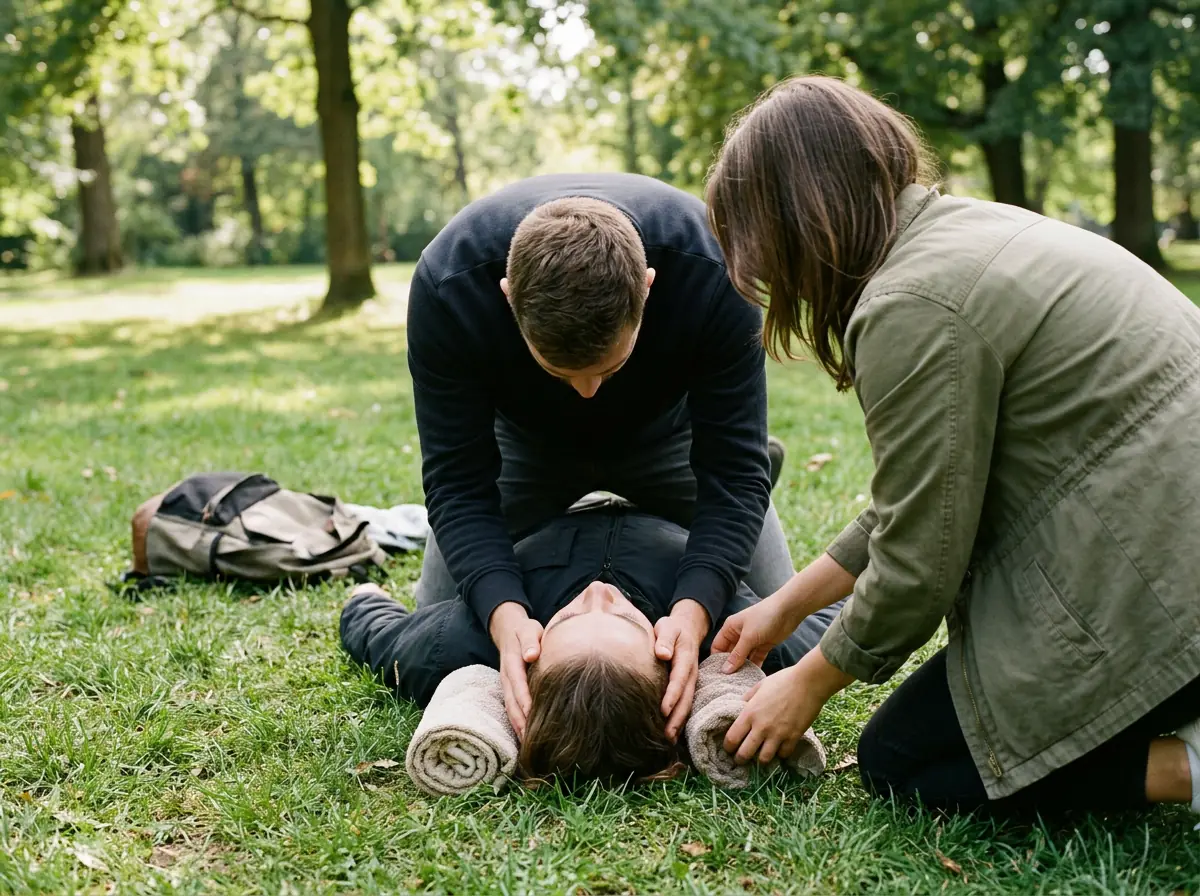
- Support the head and neckRolled towels or sheets on both sides of the neck, or hold the head with your hands. Do not tilt it back or take off a helmet.
- Only if there is dangerMove them only if the place is dangerous (fire, smoke, a collapse, traffic) or if it is the only way to save their life.
- With careDrag them with the head low and protected, for example on a blanket, or between two people if they can walk. Lift with your legs, not your back.
If they vomit or choke on blood, roll them onto their side with two people, keeping head, neck and back aligned.
Check what you already have
0 of 5 · Saved only on this device.
- Trying to set the bone or pushing an exposed one back in.
- Putting butter, toothpaste or ice on a burn.
- Moving someone who hit their neck or back when there is no need.
Sources: MedlinePlus · how to make and apply a splint · MedlinePlus · how to make a sling · MedlinePlus · burns · Mayo Clinic · burns: first aid · Mayo Clinic · spinal injury: first aid · Emergency Care, ch. 3 · lifting and moving patients