HomeStage 3 · Camping and making fireFire without matches: dry tinder, spark, magnifying lens and friction
By Global PrepperUpdated 3 official sourcesHow we make the guides
Stage 3 · Fire without matches: dry tinder, spark, magnifying lens and frictionFire without matches: dry tinder, spark or magnifying lens
A lighter gets wet or runs out. Three steps to make fire without it: prepare dry tinder, light it with a spark or with the sun, and leave friction as a last resort.
- All dry: tinder, kindling and firewood; keep the tinder in a sealed bag.
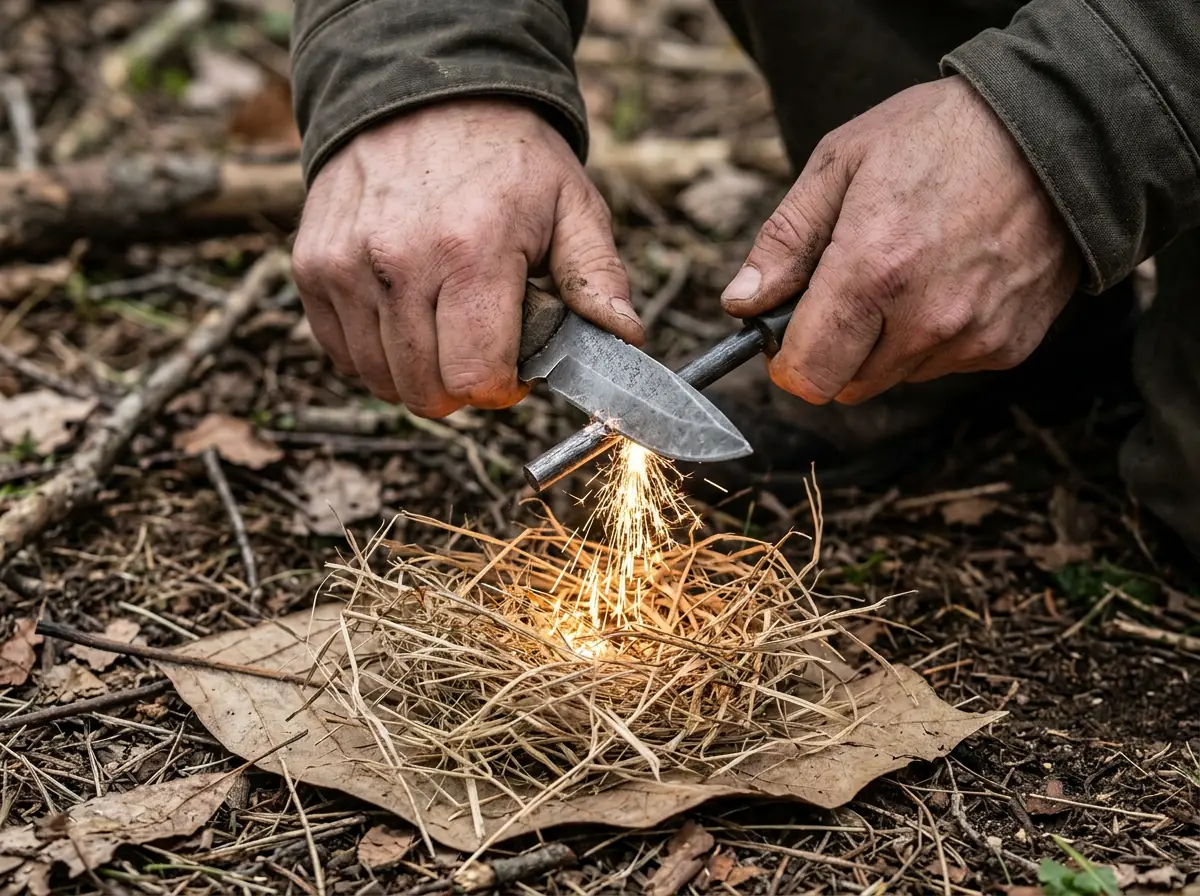
- Spark: ferro rod, or flint and steel with charred cloth.
- Lens: only in strong sun; focus until it smokes.
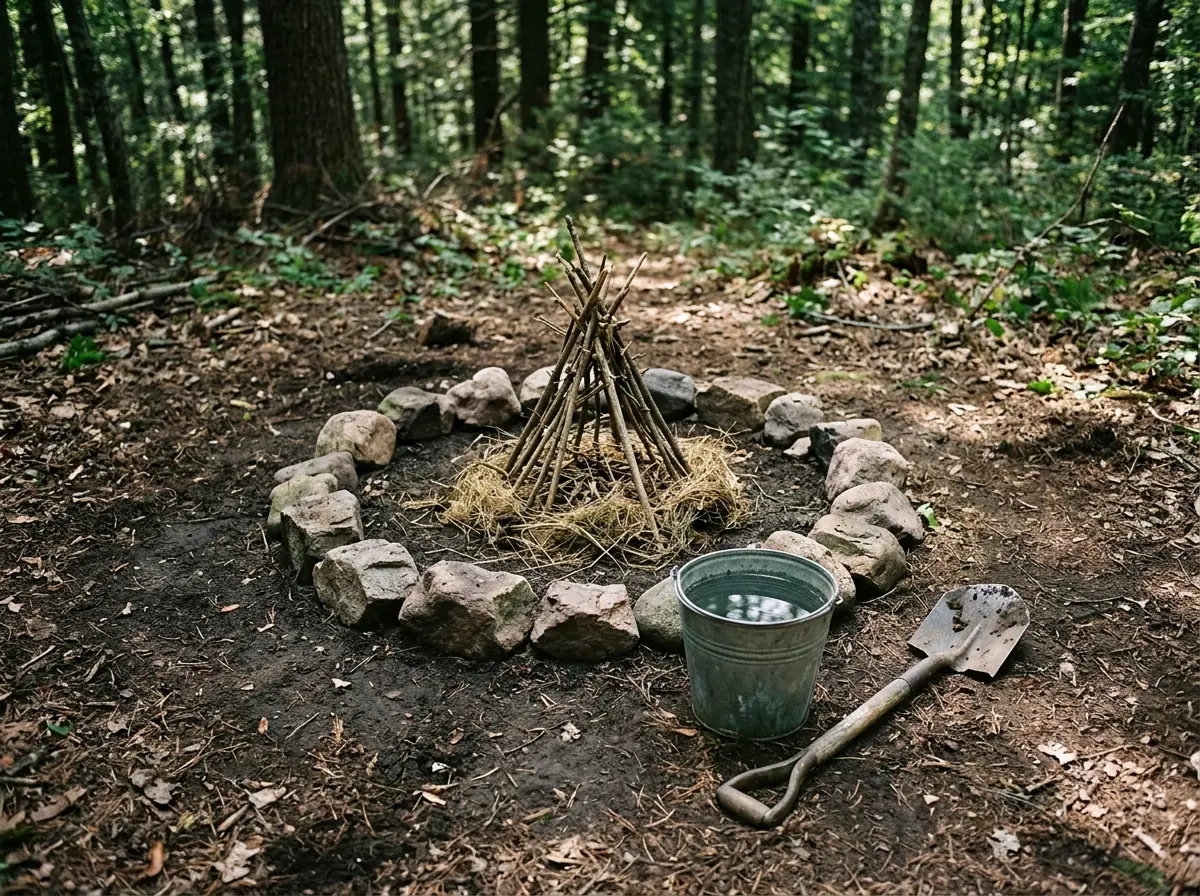
- When you finish: drown it with water, stir and touch with the back of your hand.
Prepare the pile: tinder, kindling and firewood
- Dry tinderDry leaves, grass or needles, very fine. It must be absolutely dry: gather it along the way and keep it in a sealed bag.
- Charred clothIf you only have sparks, heat cotton cloth until it turns black without burning and store it in an airtight container: it catches from a spark.
- Kindling and firewoodFirst dry sticks less than 2.5 cm (1 inch) thick, then thicker firewood. Dry damp wood near the fire.
- Build the teepeeTinder in the center and kindling leaned against it in a cone: it burns well even with damp wood. On snow, make a base of green logs laid side by side.
Light it from the side the wind comes from and never use gasoline or any other flammable liquid.
Light it without matches: spark or sun
Always carry a lighter and matches in a closed container: they are plan A. The spark and the lens are the backup, and you practice them before you need them.
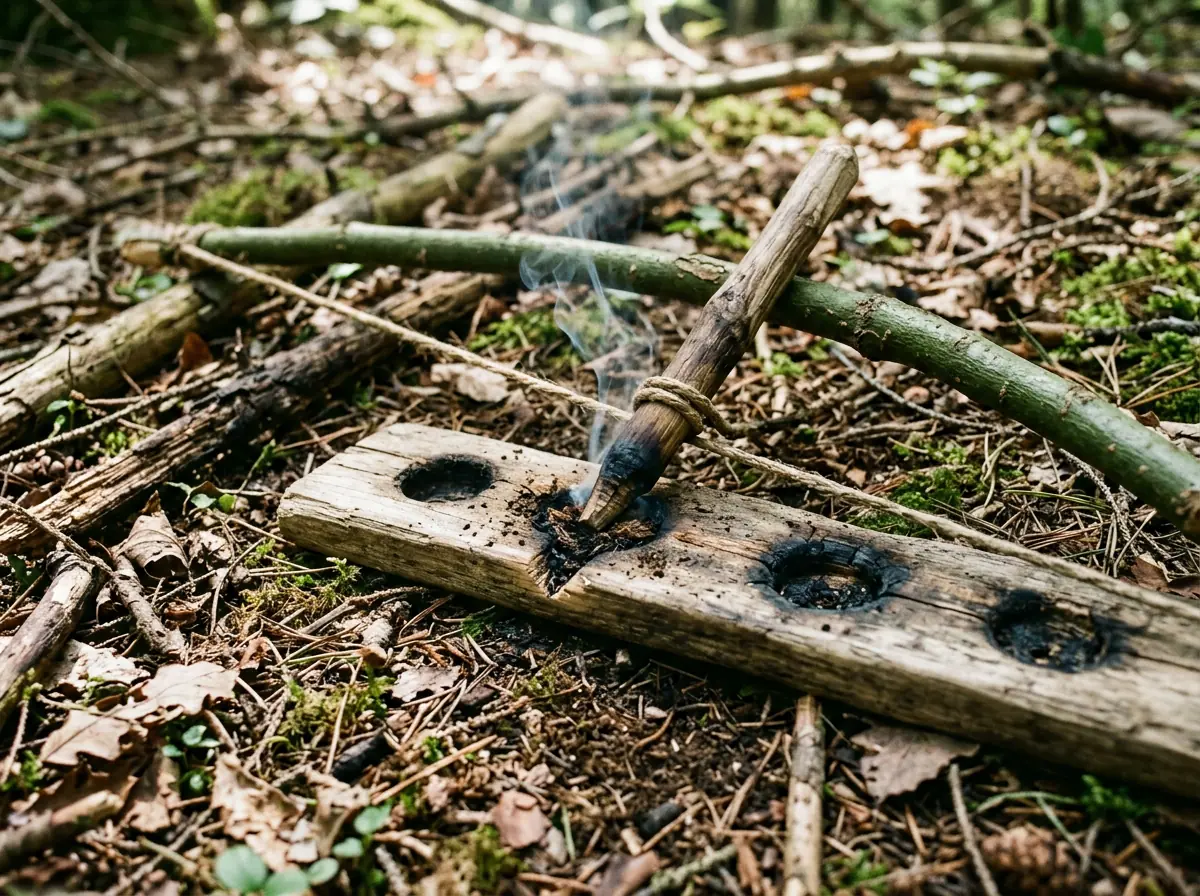
Friction: the last resort
- The partsA spindle of dry hardwood about 2 cm (1 inch) thick and 25 cm (10 inches) long, a board of dry softwood, and a green-stick bow with a taut cord.
- The boardA small depression about 2 cm (1 inch) from the edge and a V-shaped cut below it. Do not use wood from the ground: it looks dry, but it does not give enough friction.
- The socketA stone, hardwood or bone with a depression holds the top end of the spindle and lets you press down.
- Spin and blowMove the bow with a steady rhythm, faster once it flows. Blow on the tinder until it catches.
Friction is tiring and takes practice: the US Army manual warns that these methods are exhausting. Do not leave it for the first time you need it.
Check what you already have
0 of 5 · Saved only on this device.
- Using damp tinder or kindling.
- Feeding the fire with gasoline or another flammable liquid.
- Leaving with embers that are still hot.
Sources: US Army manual FM 21-76 · chapter 7, Firecraft · Smokey Bear · how to light and put out a campfire · NPS · the ten essentials