HomeStage 3 · Camping and making fireYour first night camping: choose the site, pitch the tent and sleep safely
By Global PrepperUpdated 3 official sourcesHow we make the guides
Stage 3 · Your first night camping: choose the site, pitch the tent and sleep safelyYour first night camping: a safe site, a pitched tent and stored food
Camping close to home and with someone who knows how is the best test for your pack. Three steps: choose the site, pitch the tent and spend the night.
- Site: flat, away from dead trees, ravines and low-lying areas.
- Time: set up camp before dark.
- Tent: away from the fire and the kitchen, with your head toward the high side.
- Notice: tell someone where you are going and when you will be back.
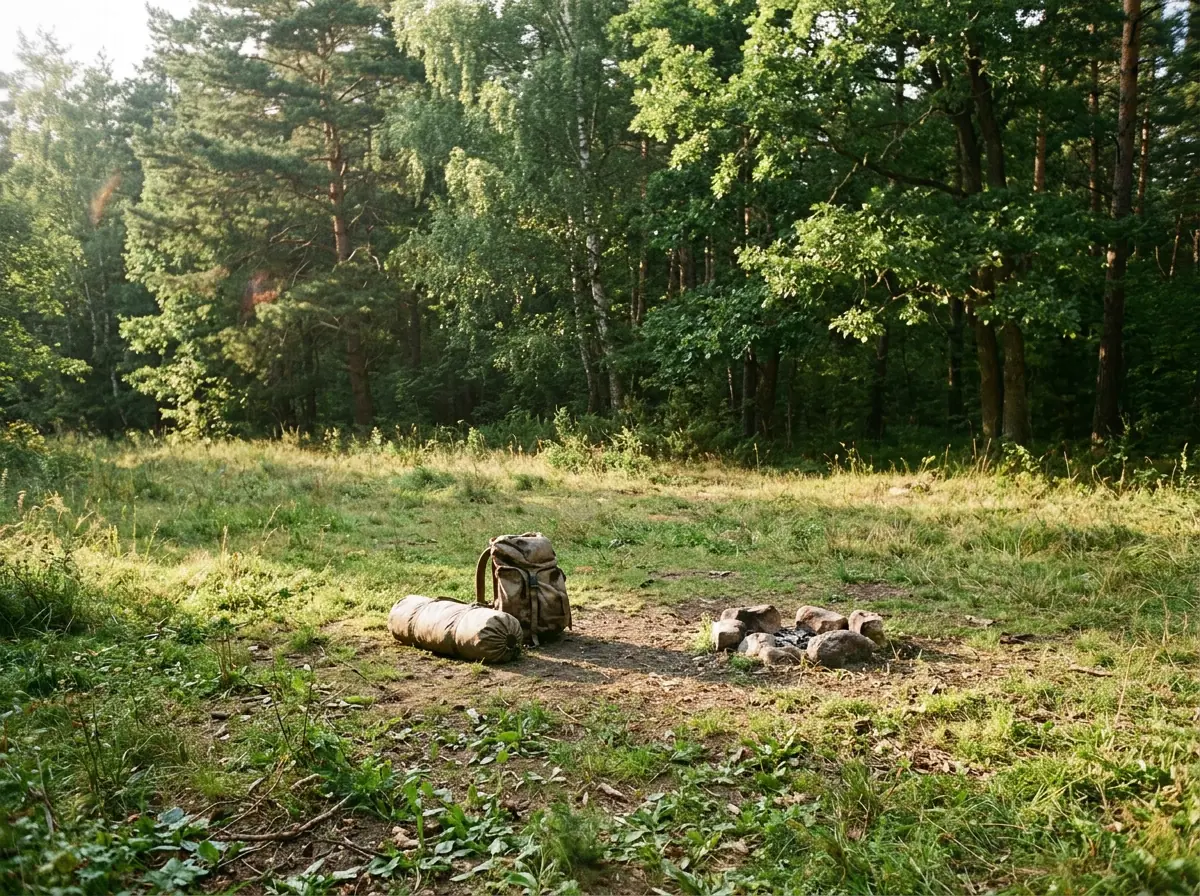
Choose the site: flat, dry and free of hazards
- Before you leaveCheck the rules of the place: drinking water, where fires are allowed, how to store food and whether you need to book.
- What to avoidThe middle of an open field and the edges of cliffs (lightning), dead trees and dry branches overhead, ravines and low areas that flood.
- Three zonesDecide where the tent, the kitchen and the food will go, a good distance from one another.
- In daylightArrive and set everything up before dark, and get to know the terrain while there is light.
Sites that are already taken belong to others: do not remove their tag or put yours up.
Pitch the tent: flat, clean and with your head up
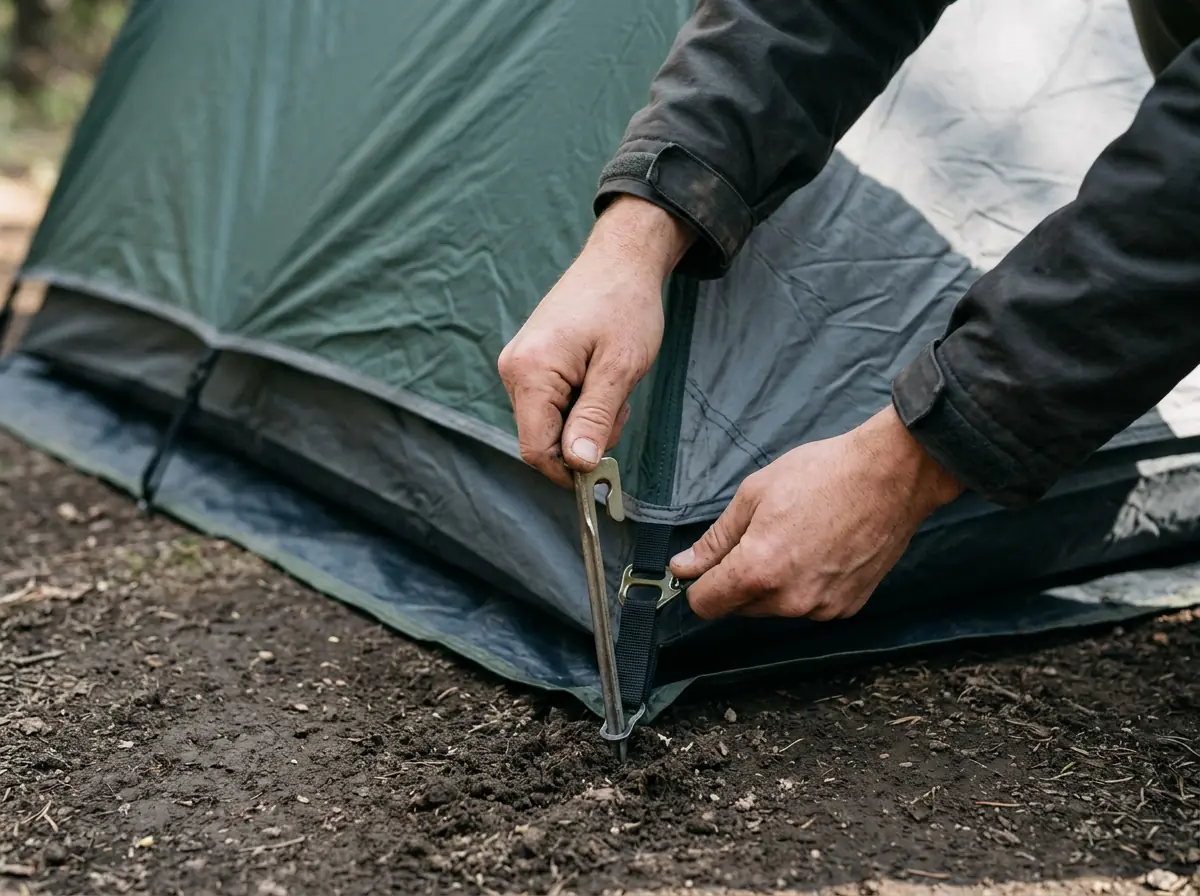
- GroundA large, flat spot, not a hollow: water collects there. Remove sticks, rocks and pine cones.
- FloorPut a tarp or a ground cloth underneath. If you use a tarp, fold the excess under so water runs off.
- OrientationSet it up with your head toward the highest side of the ground.
- Away from the fireAway from the fire pit and the kitchen: sparks melt or ignite the tent. Keep the fire 4.5 m (15 ft) or more from the tent.
Follow the manufacturer's instructions and pitch it once at home before you leave.
The night: stored food, light and a notice
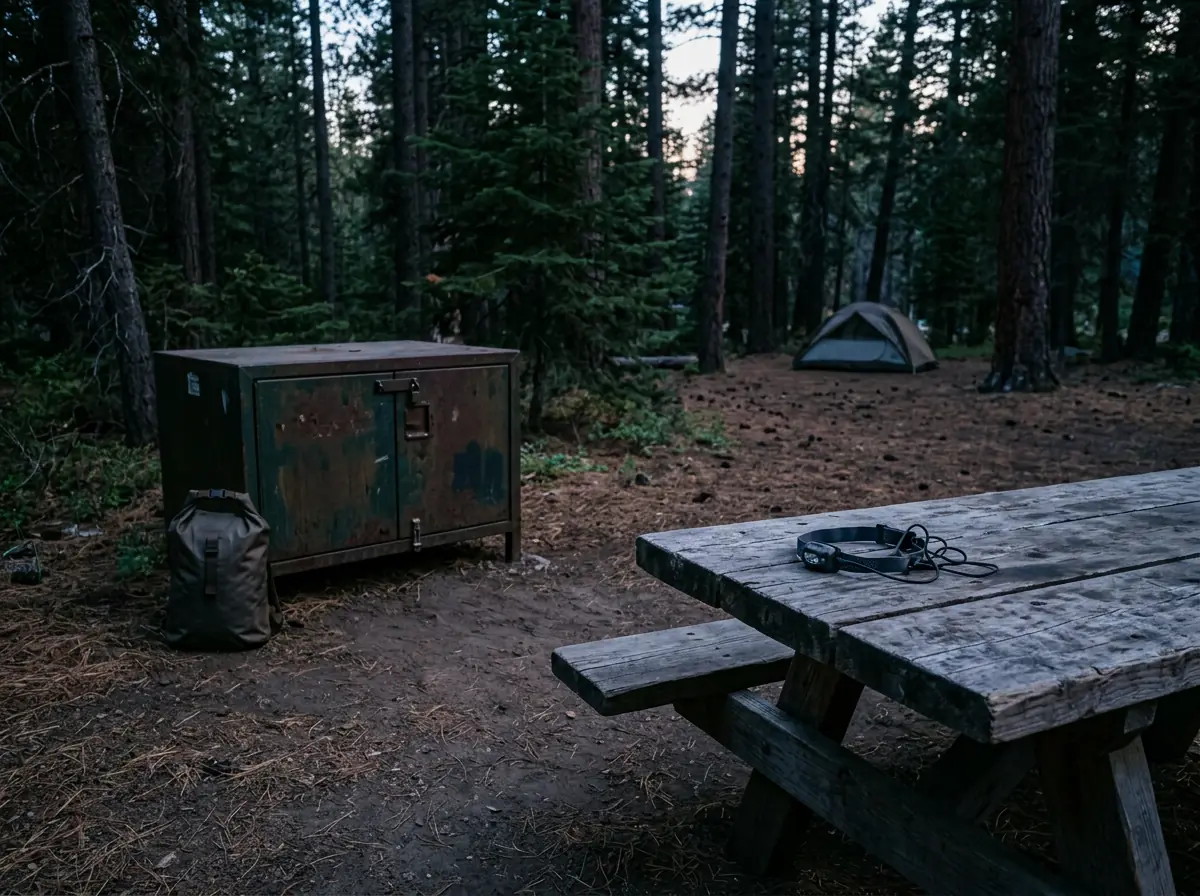
- Store the foodAway from rodents and other animals. In bear country, about 60 m (200 ft) from where you sleep, and do not sleep in the clothes you cooked in.
- With lightKeep a headlamp at hand. If you must move at night, use routes you saw in daylight and go with someone.
- Let someone knowTell someone where you are going and when you will be back.
- Dress warmlyBring an extra layer for the worst that could happen: the weather changes suddenly.
The ten essentials: navigation, sun protection, extra clothing, light, first aid, fire, repair tools, extra food, treated water and emergency shelter.
Check what you already have
0 of 5 · Saved only on this device.
- Pitching the tent in a low area or in a ravine.
- Cooking and storing food next to the tent.
- Getting to the site when it is already dark.
Sources: NPS · how to find and set up a campsite · NPS · the ten essentials · Smokey Bear · campfire safety