HomeStage 3 · In the fieldShelter without a tarp guide
By Global PrepperUpdated 2 official sourcesHow we make the guides
Stage 3 · Shelter without a tarp guideShelter without a tarp: branches, leaves and insulating yourself from the ground
With no tarp or tent, the wild provides the material. A good shelter is in a safe spot, is small and insulates you from the ground, which is where you lose the most heat.
- The site first: flat, dry and with no dead branches overhead.
- Small: just big enough for your body, so your own heat keeps it warm.
- A roof of branches and leaves, layered from the bottom up like shingles.
- A thick bed of leaves: at rest you can lose up to 80% of your body heat to the ground.
Choose the site before you build
A shelter is only as good as the place where you put it. Take a few minutes to choose it, in daylight.
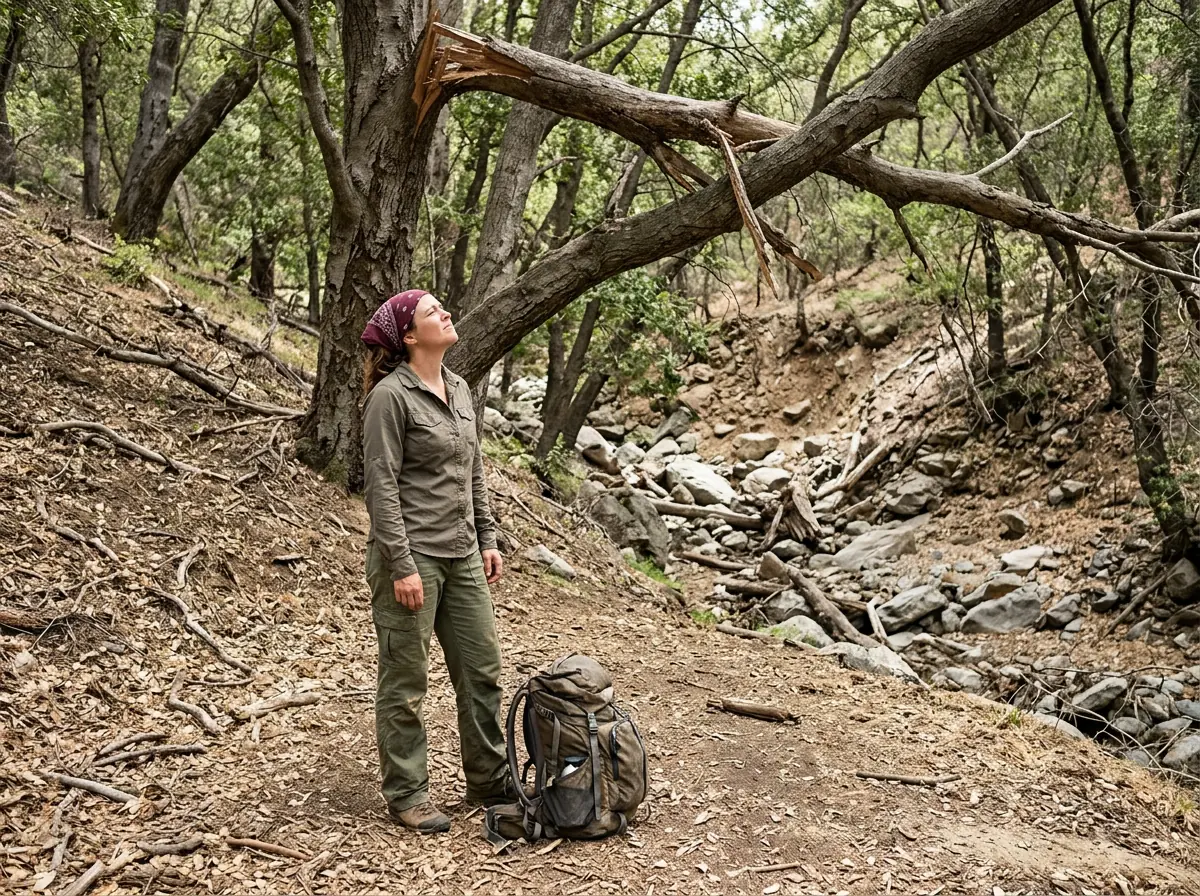
- Flat and dryFlat enough to lie down. Avoid ravines, creek beds and hollows: cold air collects there, there are more insects and it can flood.
- Look upMake sure there are no dead branches, loose rocks or dead trees that could fall on you.
- Check the groundLook for ant and wasp nests, burrows and signs of snakes or ticks before you lie down.
- Near the materialBranches, leaves and ferns a few steps away, so you finish before dark. If there is water nearby, stay above the level it rises to.
Do not lie down in a dry creek bed or at the foot of a loose slope: rain upstream or a landslide arrives without warning.
Build the shelter from branches and leaves
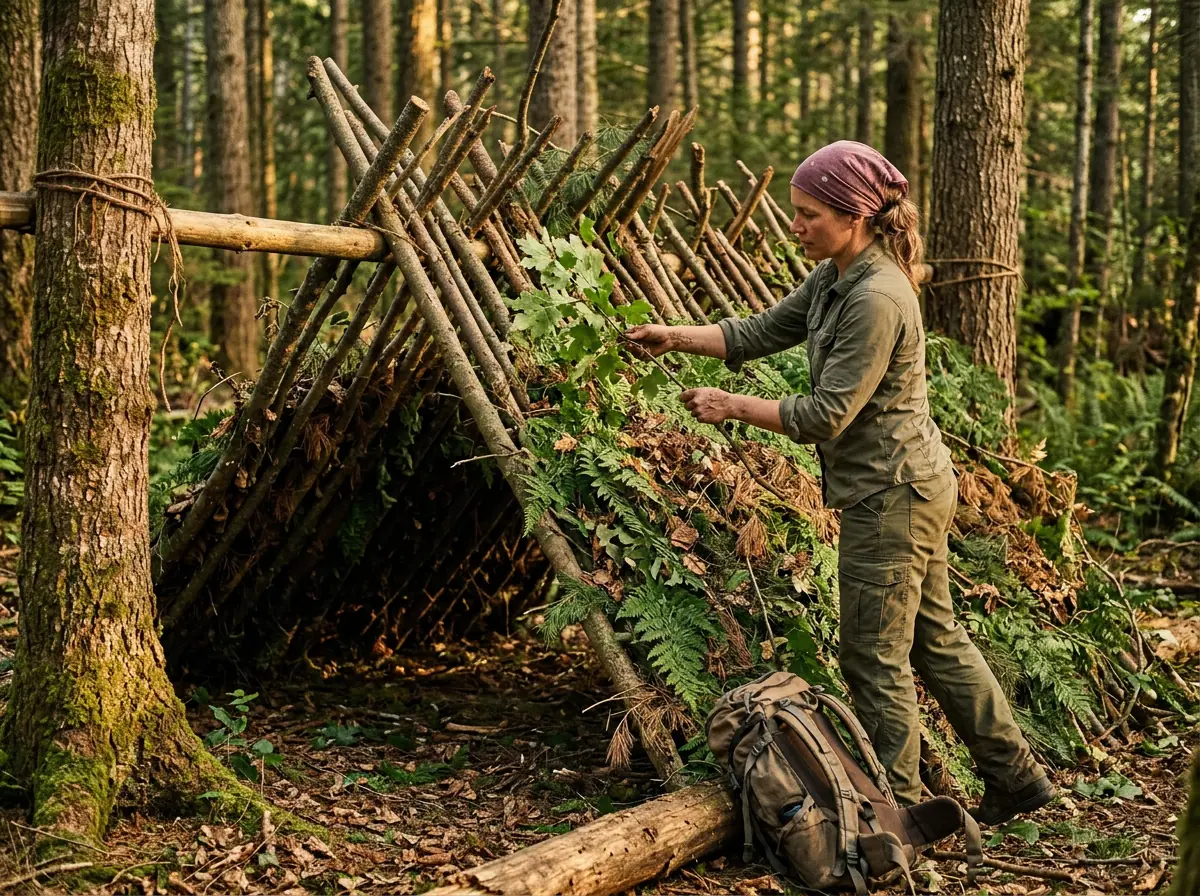
A sloped roof of branches, with the back facing the wind, is enough for one person. You need a few meters of cord and long branches.
- RidgepoleTie a straight pole about 2 meters long between two trees about 2 meters apart, at waist or chest height.
- RibsLean five to eight long poles, about 3 meters each, on the ridgepole. The back goes toward the wind.
- LatticeCross thin branches or vines over the ribs so they hold up the roof.
- Cover from the bottom upLay leaves, ferns or grass starting at the bottom, like shingles, so water runs off to the outside.
In cold or heavy rain, a debris hut keeps you warmer: a long pole resting on a trunk, branches leaned on both sides and a layer of leaf litter at least 1 meter thick. The thicker, the better.
Insulate yourself from the ground and the air
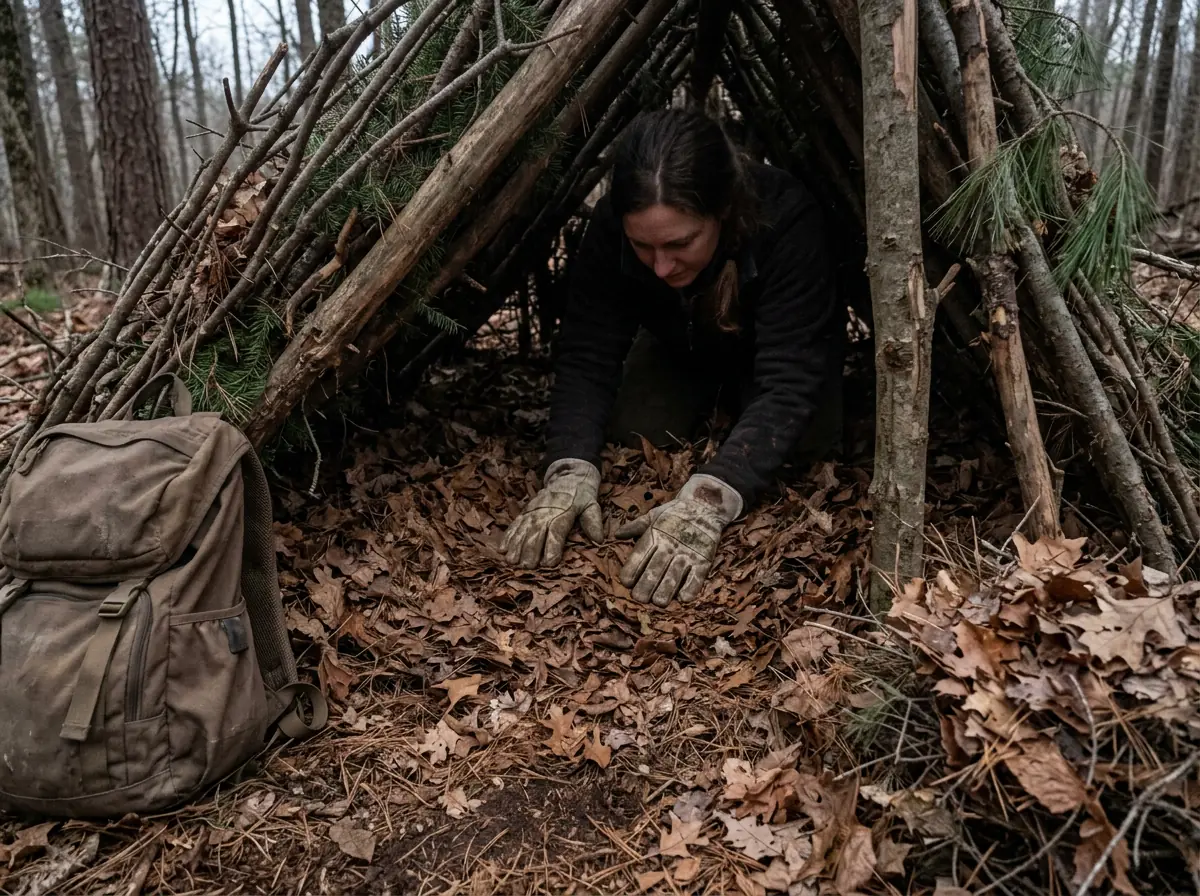
At rest you can lose up to 80% of your body heat to the ground. The bed matters as much as the roof.
- Make the bedBefore lying down, cover the floor with dry leaves, pine needles or grass, a hand-span thick or more (about 30 cm). It compresses when you lie on it, so add extra.
- Keep it smallJust for your body: big enough to protect you and small enough for your heat to keep it warm.
- Close the entrancePile leaves beside the opening so you can pull them over it when you lie down.
- Sleep dryBefore sleeping, change out of wet clothes and put on your dry layers.
Do not light a fire inside the shelter: dry leaves and branches burn, and smoke and carbon monoxide build up. If you make a fire, keep it outside and well away from the structure.
Check what you already have
0 of 5 · Saved only on this device.
- Lying down in a creek bed, a ravine or under dead branches.
- Building a huge shelter that never warms up.
- Sleeping on bare ground, with no bed of leaves.
Sources: US Army Survival Manual · ch. 5 · The Ten Essentials · emergency shelter