HomeStage 3 · In the fieldWhat to wear and carry guide
By Global PrepperUpdated 3 official sourcesHow we make the guides
Stage 3 · What to wear and carry guideClothing and pack: layers, dry and the essentials
Cold and damp make people sick fast when they head into the field badly dressed. With layered clothing and ten things in your pack you are ready for cold, rain and the surprises of an outing.
- Three layers: one that wicks sweat, one that insulates and one against wind and rain.
- No cotton: wet, it does not keep you warm and takes long to dry.
- Take off a layer before you sweat and put one on before you get cold.
- Carry the ten essentials even if you go out for just one day.
Dress in three layers
Several thin layers keep you warmer than one thick one, and you can take them off or put them on as the heat changes. Clothing should be loose: tight clothing cuts circulation.
- Bottom layerAgainst the skin, wicking sweat and drying fast: synthetic or wool. No cotton.
- Insulating layerA fleece, a sweater or a light jacket: it holds in heat. Thicker for cold or for breaks.
- Outer layerA windbreaker or rain jacket, loose enough to fit over the others. It blocks wind and rain.
- Head, hands and feetA hat, gloves and spare socks. The neck, wrists and ankles lose heat quickly.
Wet cotton does not keep you warm and takes long to dry: in the cold, that can end in hypothermia.
What you carry every time
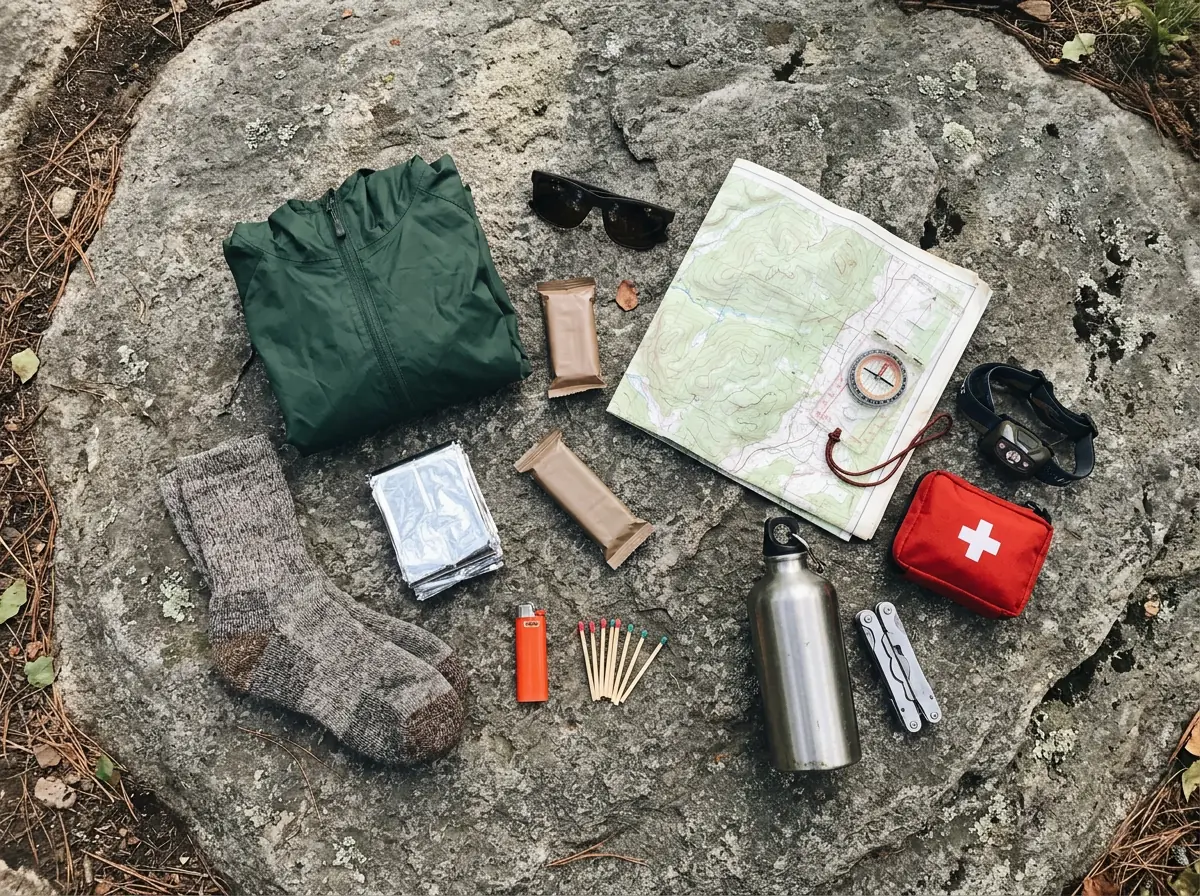
The ten essentials are the classic mountaineering list. Check them before you close your pack.
- Find your way and see: a map and compass, with the map on paper too, and a headlamp with spare batteries.
- Stay warm and protected: an extra layer, a rain jacket and dry socks; a hat, sunglasses and sunscreen; and an emergency blanket or a tarp.
- Drink and eat: water, with a way to purify more, and extra food for longer than you planned.
- Solve problems: a first-aid kit, fire (a lighter or waterproof matches) and a knife or multitool.
Stay dry and at the right temperature
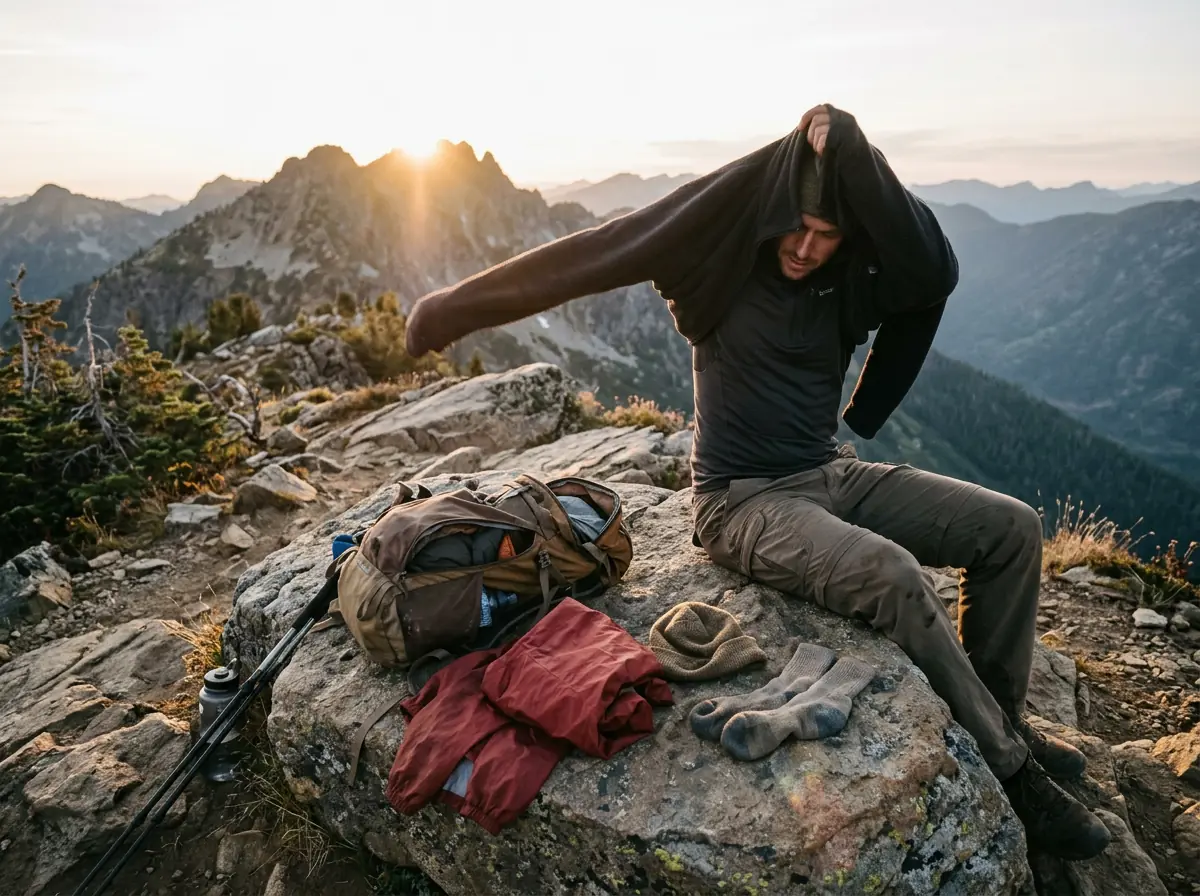
If you sweat, your clothes get wet and stop keeping you warm; in the cold, sweat can lead to hypothermia. Adjust your clothing before your body asks you to.
- Take off a layer before you sweatBefore a hard climb, open a zipper, take off a layer or pull your hat off.
- Put one on when you stopWhen you rest or the sun goes behind a ridge, bundle up before you get cold.
- Change what is wetSwap wet socks for dry ones and keep spare clothes in a waterproof bag.
- Check and repairLook for rips or tears in your clothes and fix them before they grow.
Strong shivering, clumsiness or confusion: dry them, warm them up and get help. Recognize hypothermia.
Check what you already have
0 of 5 · Saved only on this device.
- Wearing cotton in the cold or damp.
- Leaving without a rain jacket because the sky is clear.
- Waiting until you sweat or shiver to adjust your clothes.
Sources: American Hiking Society · layering system · The Ten Essentials · the ten essentials · US Army survival manual · ch. 15, cold weather