HomeStage 3 · Live off what you produceSmall livestock guide: chickens and rabbits
By Global PrepperUpdated 6 official sourcesHow we make the guides
Stage 3 · Small livestock guide: chickens and rabbitsChickens and rabbits: housing, feed and health
A few hens give you eggs and a few rabbits give you meat without depending on a store. Learn to give them a safe home, feed them and look after their health, and yours, before you depend on them.
- Start with a few animals: only as many as you can feed, shelter and protect.
- Clean water, always: it is the first thing they need.
- Shut them in before dark if the run is not predator-proof.
- Wash your hands after touching them or their eggs: they can give you Salmonella.
Give them a home that is safe and ventilated
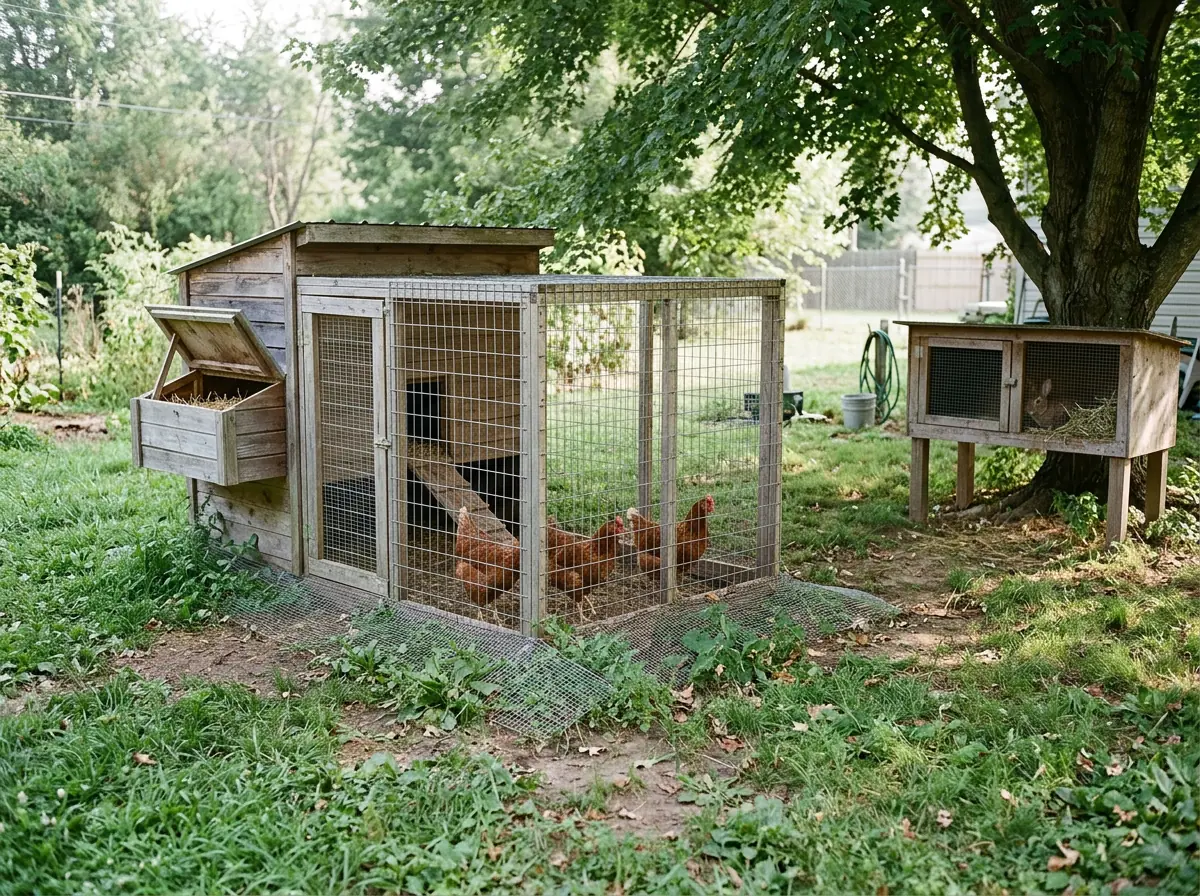
- ChickensInside the coop, 3 to 4 sq ft (0.3 to 0.4 m²) per hen, and 10 sq ft (1 m²) of run per bird. A perch of 8 to 10 in (20 to 25 cm) per bird and one nest box for every 4 or 5 hens.
- RabbitsA wire cage of about 30 × 30 × 18 in (76 × 76 × 46 cm) for one doe or for growing fryers. For rabbits over 10 lb (4.5 kg), add a resting board so their feet do not get sore.
- Shade and shelterKeep rabbits in the shade, out of direct sun: above 85 °F (29 °C) for several days, a buck's fertility can drop. Protect them from drafts, wind and cold rain.
- Against predatorsBury the mesh 12 in (30 cm) deep and bend it 6 in (15 cm) outward. Cover the run against birds of prey and close the gaps: a mouse can get through one the size of a coin.
Ask first what your town allows: many places limit or ban chickens and rabbits, and require a license to sell eggs.
Feed, water and eggs
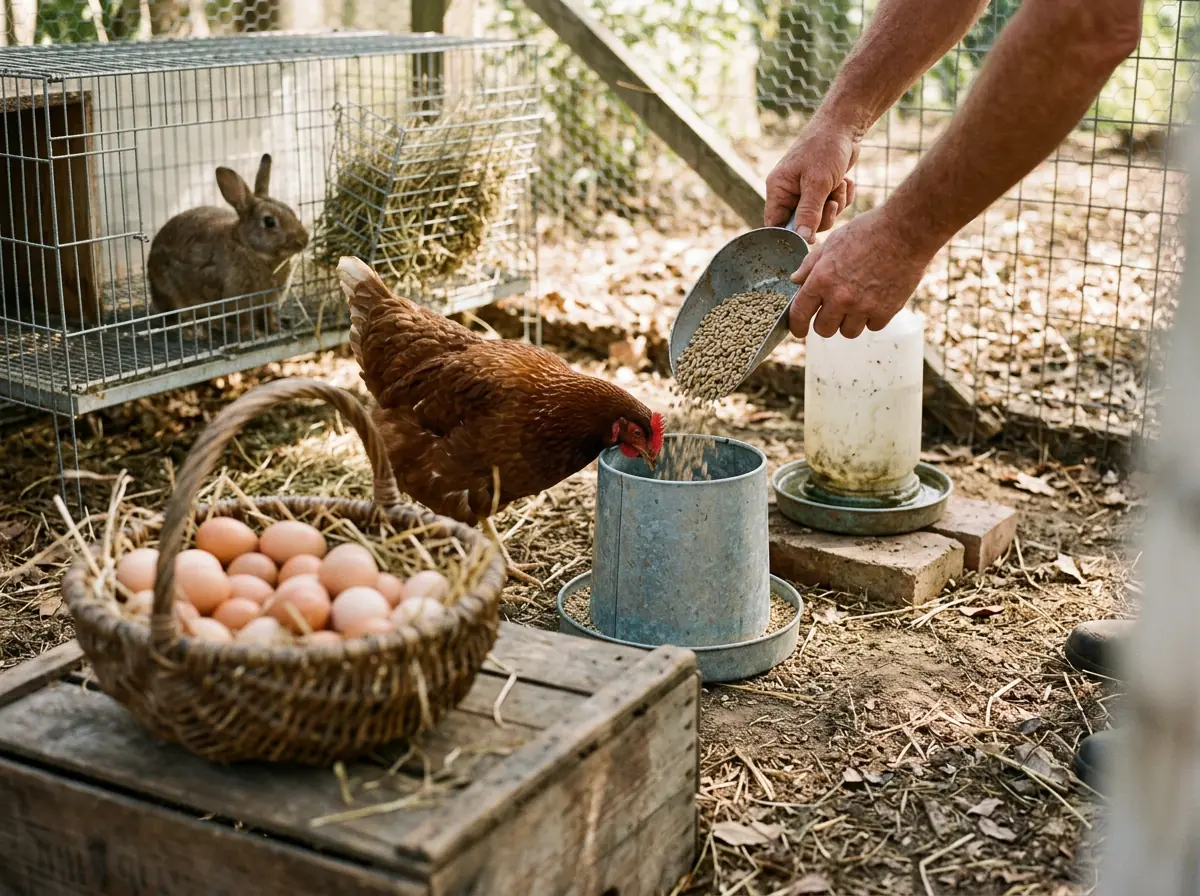
Buy commercial feed: it is easier than mixing your own. A fryer rabbit reaches about 4 lb (1.8 kg) in 8 to 10 weeks and is prepared like small game.
- Store feed in a closed, dry container for less than 2 months: that keeps out mice and mold.
- Collect eggs often and clean them dry; do not wash fresh eggs with cold water. Refrigerate them and cook them until the yolk and white are firm.
Keep them from getting sick and from making you sick
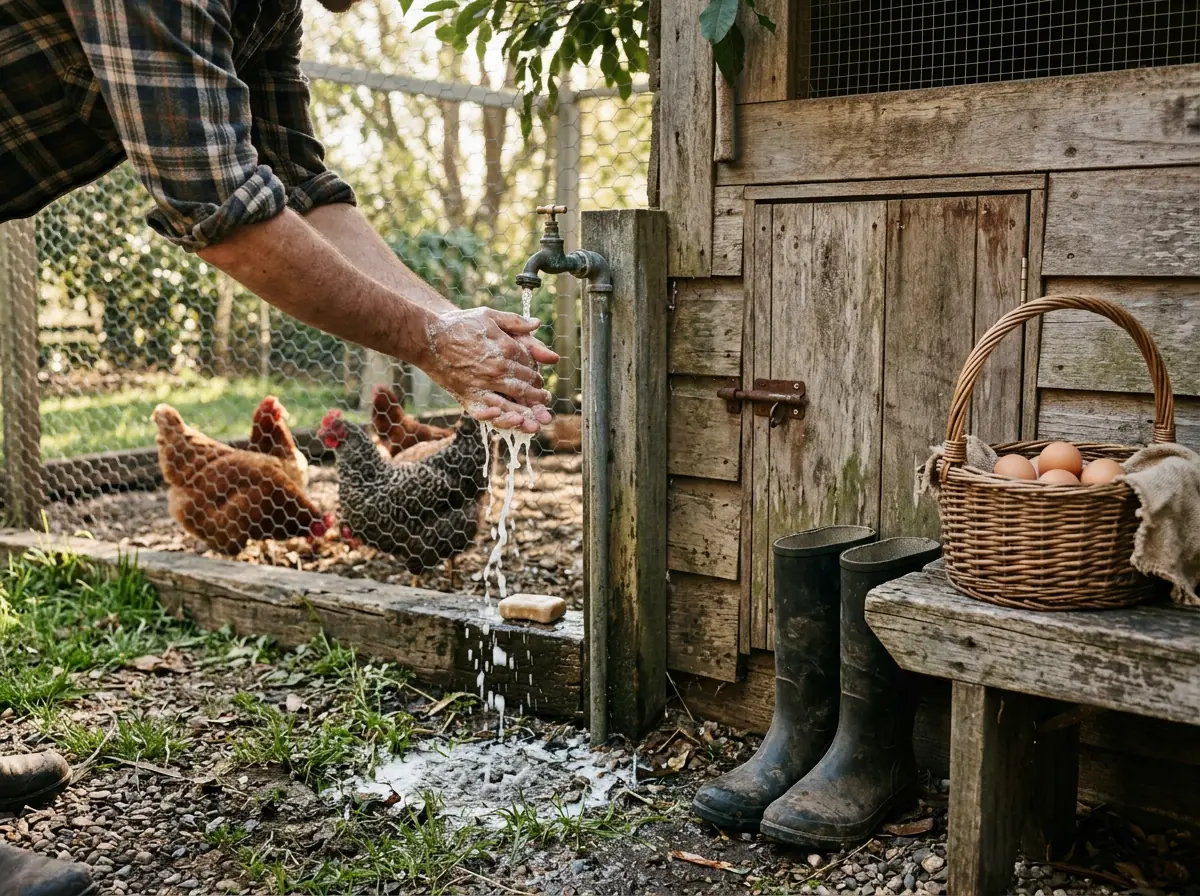
- Wash your handsWith soap and water after touching birds, the coop, eggs, feed or water. Keep boots just for the run, leave them outside and do not kiss or cuddle the birds.
- 30-day quarantineEvery new animal lives apart for 30 days, with its own gloves, boots and tools. Do not buy rabbits of unknown origin.
- The signsBirds: eating or drinking less, ruffled feathers, watery diarrhea, eye or nose discharge, fewer eggs. Rabbits: sudden death or a bloody nose.
- Hygiene and breedingClean the rabbit cages daily: that prevents coccidiosis. A doe carries her litter about 31 days: put in the nest box on day 28 and do not handle the kits for the first few days.
Children under 5 should not touch birds or chicks, and birds stay out of the house. If several birds die suddenly, notify the official veterinary service.
Check what you already have
0 of 5 · Saved only on this device.
- Keeping more animals than you can feed and protect.
- Washing fresh eggs with cold water.
- Putting a new animal with your own without waiting 30 days.
Sources: CDC · backyard poultry · Oregon State University · how to feed laying hens (PNW 477) · Virginia Cooperative Extension · small-scale poultry housing · University of Maine · backyard meat rabbits (bulletin 1044) · USDA APHIS · rabbit hemorrhagic disease · USDA APHIS · Defend the Flock