HomeStage 3 · Preserving foodFood preservation guide
By Global PrepperUpdated 2 official sourcesHow we make the guides
Stage 3 · Food preservation guidePreserving food: make the harvest last
What you don't preserve is lost at harvest. Sun, salt, vinegar and sugar have preserved food for thousands of years, without a refrigerator.
The only thing you need to remember
- Sun-dry fruit, chiles, herbs and vegetables in thin slices.
- 5% vinegar, salt and boiled jars for pickles.
- Vegetables, beans or meat in jars: only with a pressure canner.
- Bulging lid or bad smell: throw it out without tasting.
Step 1 of 4 · Sun-dry
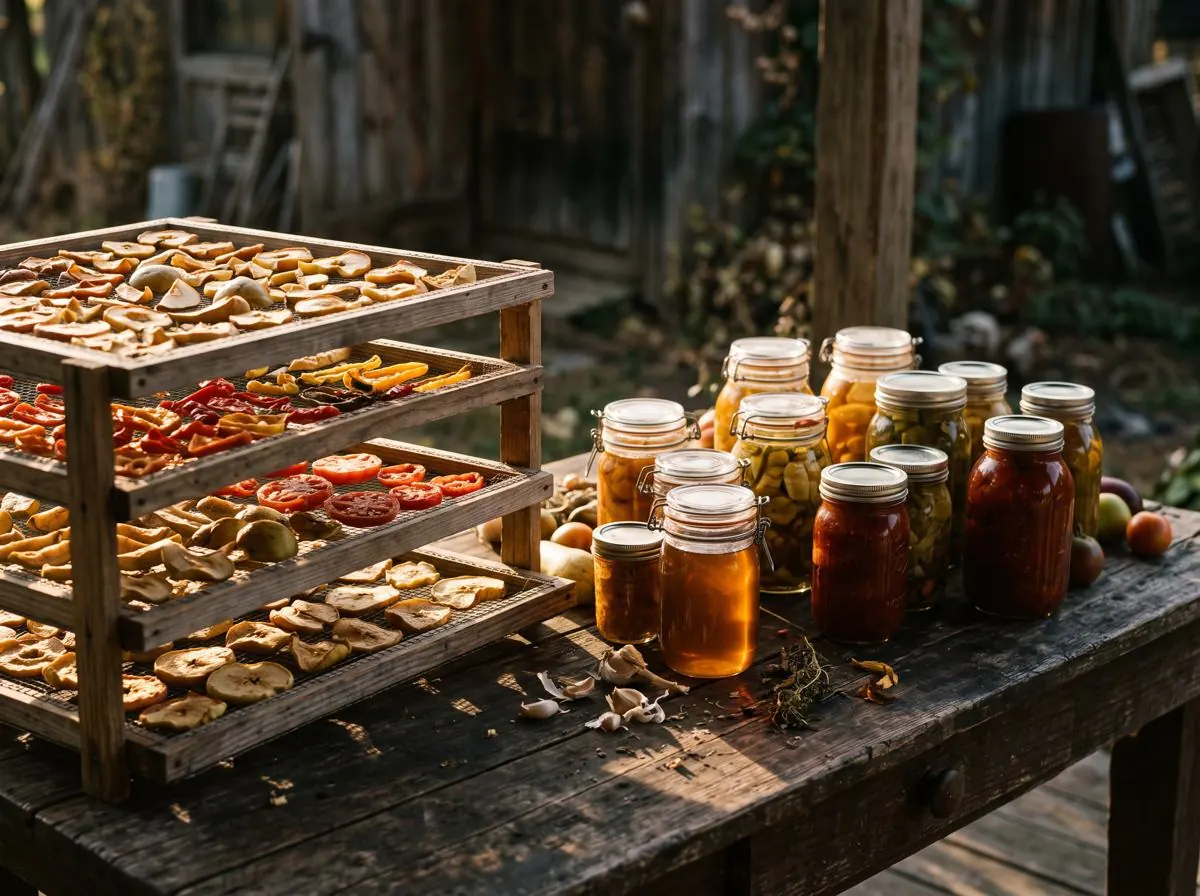
A solar dryer made of wood and screen
- Thin slicesHalf a centimeter (¼ in), even so they dry at the same rate.
- Inside the dryerA box with a clear lid and insect screen, in the sun and with airflow.
- Two to four daysUntil fruit is leathery and vegetables snap when bent.
- Store in a jarSealed, in a dry place. If moisture appears, dry it again.
Don't dry food in the open without a screen: flies and dust spoil it.
Step 2 of 4 · Pickle
Vinegar, salt and clean jars
- Boil the jarsJars and lids for 10 minutes in boiling water.
- Make the brineEqual parts 5% vinegar and water, with one tablespoon of salt per cup.
- Fill and coverRaw or blanched vegetables, completely covered with the hot liquid.
- Water bathTo store outside the refrigerator, boil the sealed jars for 10 to 15 minutes.
Another option without vinegar: sauerkraut, shredded cabbage with a little salt, packed into a jar until it releases its juice.
Step 3 of 4 · No risk
Botulism: the risk in jars
Safe in a water bathAcidicFruit, jam, vinegar pickles and tomato sauce with lemon.
Only with a pressure cannerLow-acidVegetables without vinegar, beans, corn, meat and broths.
AlwaysCheckLid sucked in when opened, clear liquid and normal smell.
If the lid is bulging, it foams or smells strange, throw it out without tasting. Botulism can kill with a single spoonful.
- Label each jar with its contents and date.
- Use the oldest first; homemade preserves within the first year.
Step 4 of 4 · Check
Check what you already have
0 of 5 · Saved only on this device.
Three common mistakes
- Canning vegetables or beans in a water bath without vinegar.
- Tasting from a jar with a bulging lid "to see if it's still good."
- Drying food in the open without a screen.
Sources: WHO · botulism · FAO · home gardens