HomeStage 3 · In the fieldWater in the field guide
By Global PrepperUpdated 4 official sourcesHow we make the guides
Stage 3 · Water in the field guideWater in the field: no source, no route
The water you carry only buys time. When it runs out you have to be next to a source, so water decides where you go and where you end up.
- A liter weighs a kilo. On foot you cannot carry water for many days.
- Carry the treatment, not the water: a filter and a few tablets weigh grams.
- Plan the route from source to source and choose the destination for its water.
- No technique replaces a source.
Water on the move: how much to carry and how to treat it
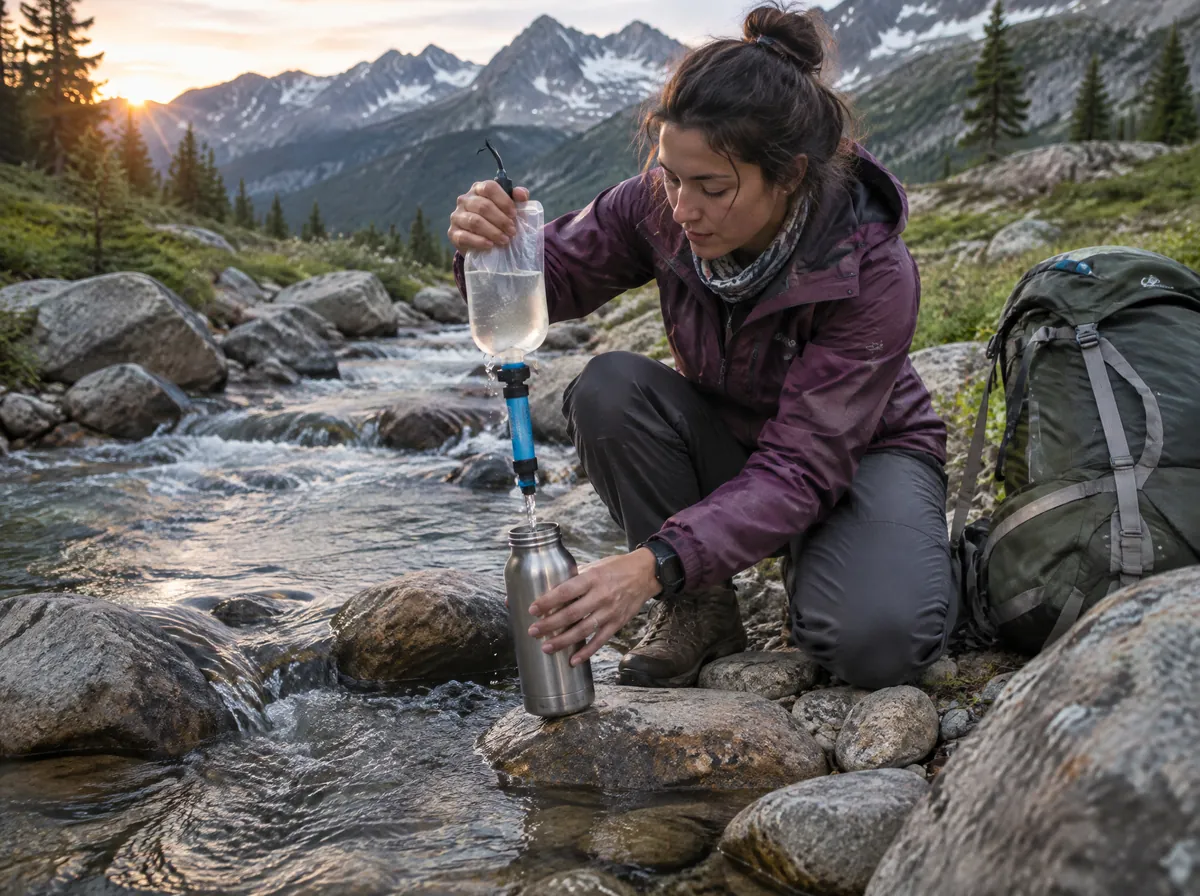
When walking you need between half a liter and a liter for every hour of march, depending on heat and effort. Sip every 15 or 20 minutes without waiting to feel thirsty.
- Work out the stretchHours of walking to the next source times half a liter to a liter. That is what you carry and no more: every liter weighs a kilo.
- Fill up at every sourceDrink until you are satisfied before leaving and refill everything you carry.
- Prefer running waterStreams and rivers before puddles or standing water, and upstream, away from towns, livestock and crops.
- Always treat itIf it is cloudy, strain it through a clean cloth or a portable filter. Then disinfect it with one of the methods below.
Neither filtering nor boiling removes chemicals or salt. If the water smells of fuel or chemicals, or is next to mines, factories or sprayed fields, do not drink it.
Finding water in the terrain
Water runs downhill: look in the lowest ground, not the highest.
- Go to the bottomValleys, ravines and channels. A small stream, downhill, leads to a larger one and to a river.
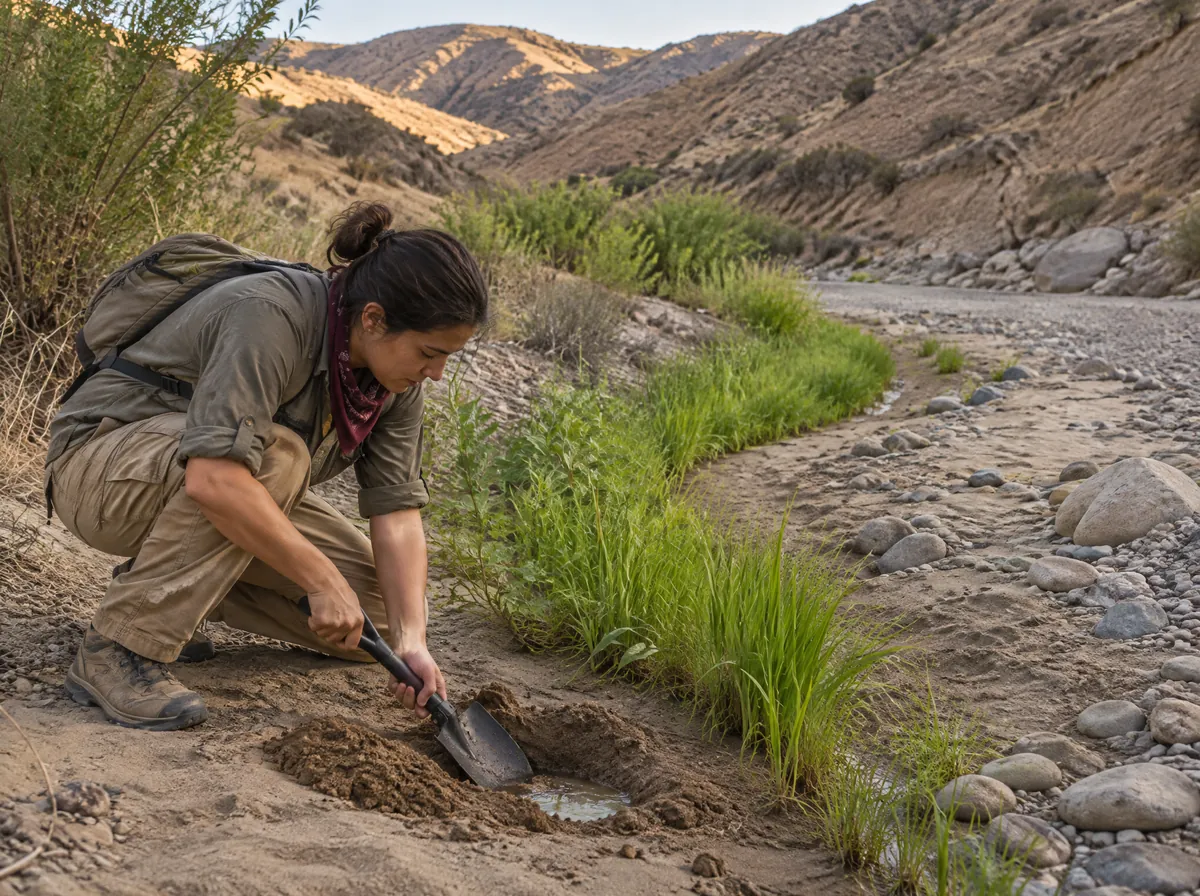
- Look for greenA strip of green plants in a dry area marks moisture nearby. Follow the strip toward where it looks densest.
- Dig where it is dampIn a dry riverbed or in a hollow where rain collected, where the soil is damp and easy to dig. Wait for the hole to fill and treat the water.
- Collect rain and dewStretch a tarp or a plastic sheet to guide rain into a clean container. At dawn, wipe a clean cloth over dewy grass and wring it out: it is slow, but you gather some.
Do not stay in a dry riverbed: if it rains upstream, it rises in minutes. And do not drink seawater, urine or alcohol: they dehydrate you.
The bag or still tricks you see in videos yield, according to the US Army manual, half a liter to a liter in 24 hours: they do not replace a source.
Plan the route and choose the destination by its water
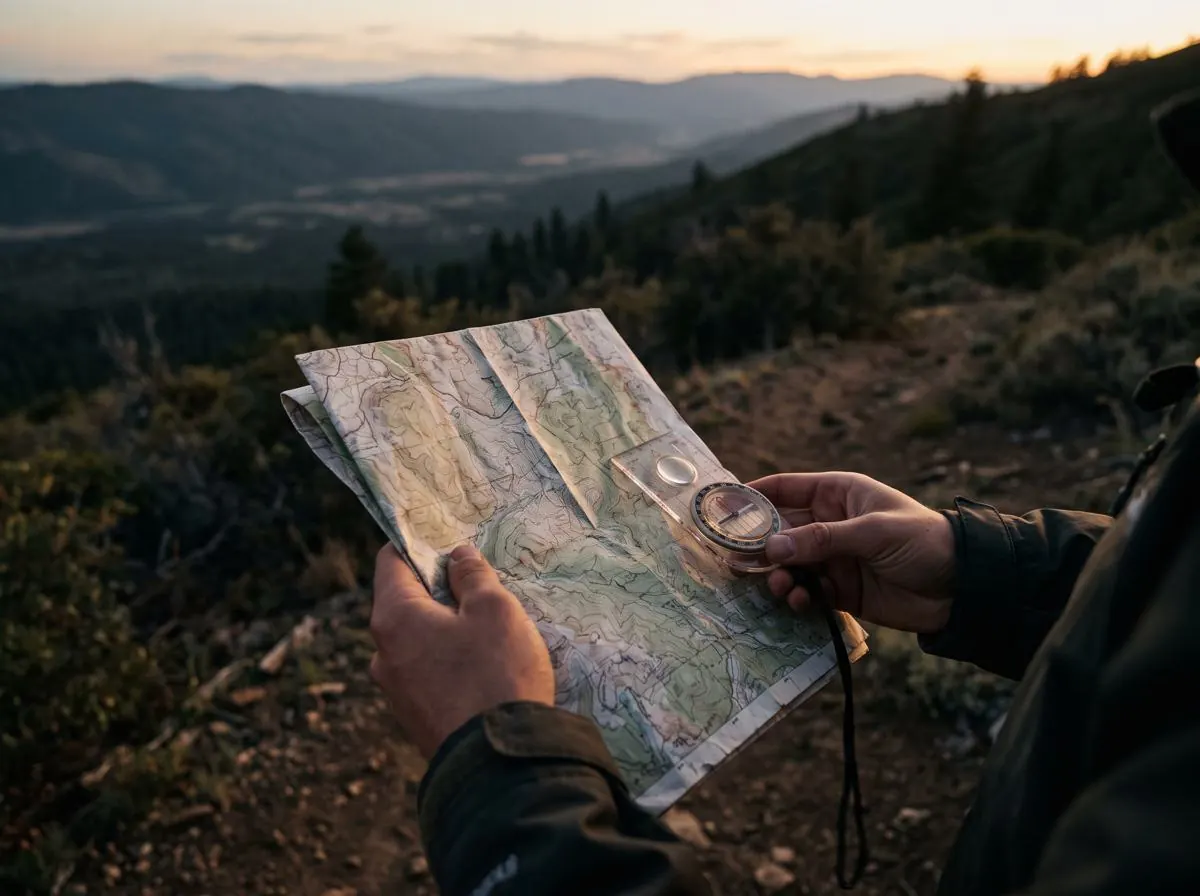
- Mark the sources before leavingRivers, wells, springs and villages, on a paper map. Write down how many hours lie between one and the next.
- Make every stretch carryableIf from one source to the next you need more water than you can carry, that route does not work: find another.
- Have a backup sourceIn a drought some sources dry up. Mark two per stretch and ask people who live there which one still has water.
- Choose a destination with a permanent sourceA river, a well or a spring that does not dry up, within walking distance. Without that, however good the place is, it is not a destination.
Without a water source in sight, there is no route. If you cannot reach one, the decision is to leave earlier or choose another place.
- Practice one stretch near home: walk with the water you would carry and measure how much you really drink.
Check what you already have
0 of 5 · Saved only on this device.
- Carrying water for many days instead of planning the sources.
- Drinking from a source without treating it because it looks clean.
- Staying in a dry riverbed: if it rains upstream, it rises in minutes.
Sources: Oregon State · basic water · The Ten Essentials · water and hydration · US Army survival manual · ch. 6 · CDC · safe water