HomeStage 2 · Your pantryRotating pantry and shopping plan: how to store food
By Global PrepperUpdated 5 official sourcesHow we make the guides
Stage 2 · Rotating pantry and shopping plan: how to store foodRotating pantry: buy little by little and rotate the oldest
A pantry you forget about spoils. Learn to work out two weeks of food, to buy it little by little each week, and to rotate it so you always eat the oldest first.
- Goal: 2 weeks of non-perishable, easy-to-prepare food, to stay at home.
- Buy two of what you already use on every shopping trip.
- Oldest first: date every package and put the new stock at the back.
- Cool and dry, away from the stove and the sink.
Count what you have and what you're missing
- The goal: two weeksTo stay at home, the American Red Cross recommends non-perishable, easy-to-prepare food for 2 weeks; for leaving home, for 3 days.
- Count the servingsMultiply the number of people by 14 days. As a starting point, Utah State University figures 1 pound (about 450 g) of dry food per person per day, with about 1,600 calories per pound.
- Take inventoryBefore buying, check the pantry, the freezer and the storeroom, and write down what you have and its date. Fit what you need to your family and don't repeat purchases out of habit.
- Buy what you eatStore what your family eats and eat what you store. If you don't cook dry beans, buy canned beans.
Food doesn't get better in storage: buy good quality and don't store what is already old or dirty.
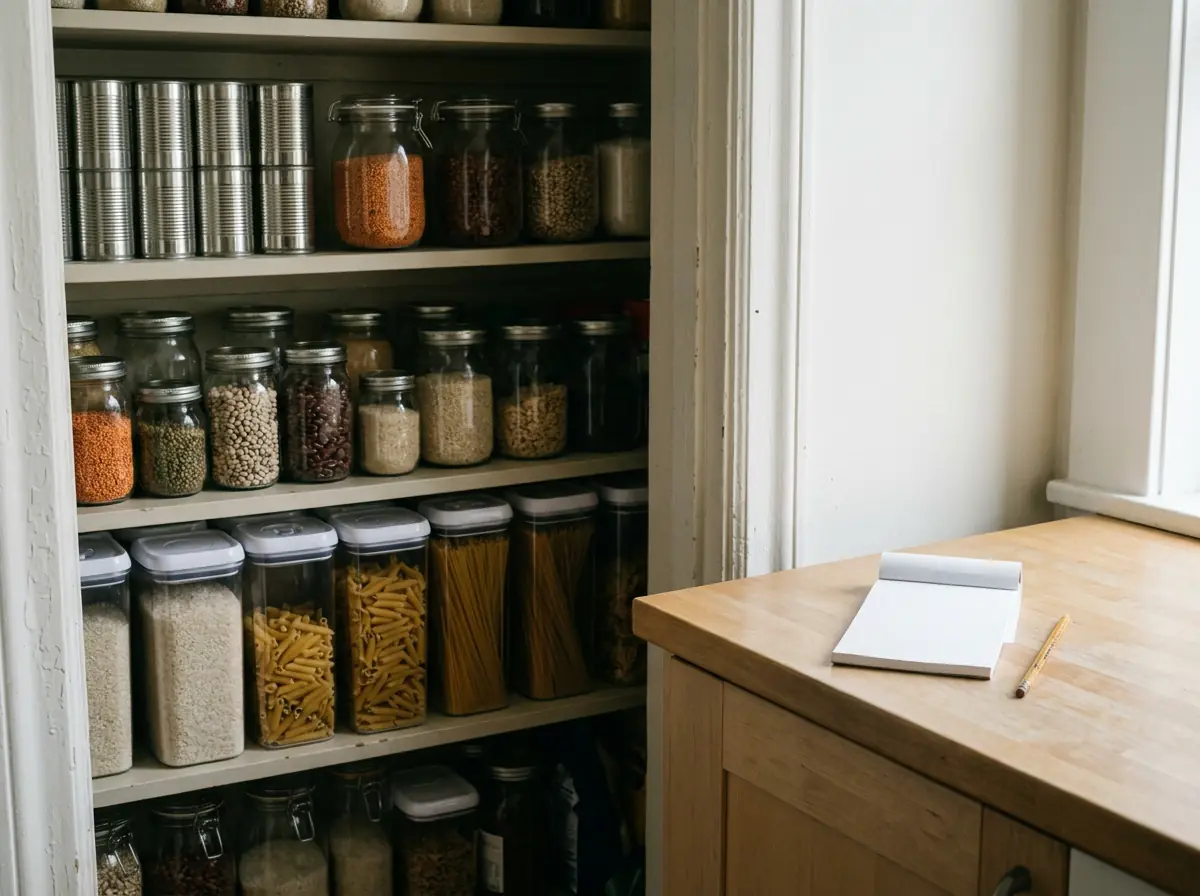
Buy a little each week
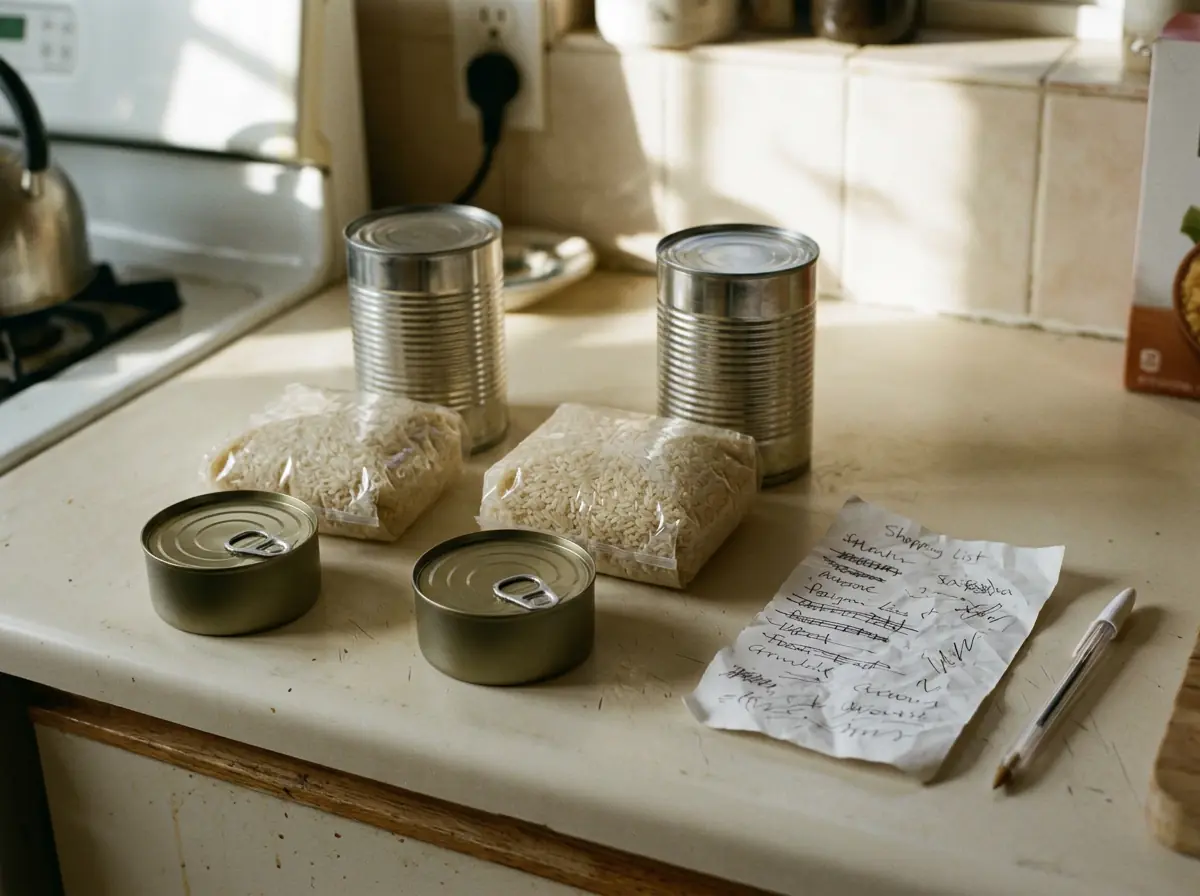
- Buy twoOn every shopping trip, buy two of what you normally use. Date the extra one, store it and use the oldest first; replace it on the next trip.
- List and limitBefore you go, make a list and set a spending limit, and stick to both. If you planned half a case of canned corn, buy only that. Don't go into debt buying in bulk.
- Check before you payCans should not be bulging or leaking, or have heavy rust or deep dents, and packages should be dry and free of pests.
- Move loose items into jarsWhen you get home, move anything that comes loose into jars or tubs with tightly closed lids, or into smaller bags.
Buy what you really eat. Two more cans of something nobody wants to eat just take up space and spoil.
Store and rotate without losing anything
- A cool, dry placeIdeally below 29 °C (85 °F). Nothing next to the stove, under the sink or in damp basements or garages. With more heat, food lasts less: at 32 °C (90 °F), half as long.
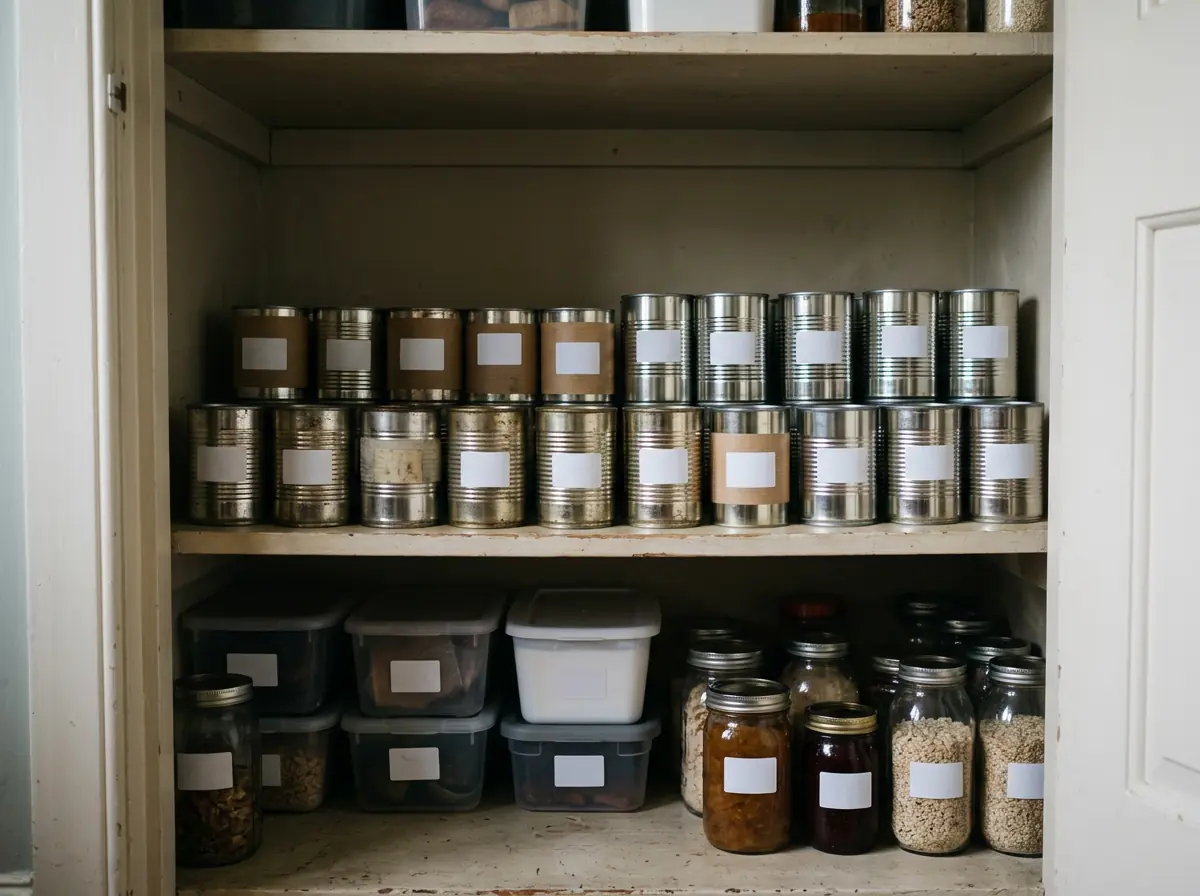
- Date and rotateWrite the purchase date on every package. New stock goes at the back and the oldest at the front. Check the pantry every few weeks and use the oldest first.
- Against pestsKeep food in containers with tightly closed lids and off the floor. Clean up spills and seal cracks. If pests appear, clean and disinfect the area.
- How long it lastsLow-acid cans (meats, soups, beans, corn): 2 to 5 years. High-acid cans (tomato, citrus, pineapple): 12 to 18 months. Dry rice and pasta: about 2 years.
A “best by” date indicates quality, not safety. Throw out a can that is bulging, leaking, heavily rusted or has a deep dent in the seam, and don't taste anything doubtful.
Check what you already have
0 of 5 · Saved only on this device.
- Buying all at once food that nobody will eat, or going into debt buying in bulk.
- Storing food next to the stove, under the sink or in a damp basement.
- Tasting a can that is bulging, leaking or smells odd “to see if it's still good”.
Sources: USDA FSIS · safety of shelf-stable foods · Utah State University · storing food at home · Utah State University · seven tips before restocking your pantry · American Red Cross · supplies for an emergency kit · Ready.gov · build an emergency kit