HomeStage 1 · The principlesThe principles of preparedness: what comes first and how to practice it
By Global PrepperUpdated 5 official sourcesHow we make the guides
Stage 1 · The principles of preparedness: what comes first and how to practice itThe principles: what comes first, what comes next and how to practice it
Before buying anything, it helps to know in what order to prepare things. Three steps: the rule of 3, the basics first and practicing what you already have.
- Urgent: whatever you would run short of soonest gets handled first.
- Basics: water, food, light, radio, first-aid kit, medicines and papers.
- Practice: test your gear before you need it.
- Review: your kit and your needs, at least once a year.
The rule of 3: what is most urgent
- A rule of thumbIt is said that a person can last about 3 minutes without air, about 3 hours without shelter in harsh weather, about 3 days without water and about 3 weeks without food.
- It helps you set an orderIt is not a schedule. Use it to decide what to deal with first: what you would run short of soonest, you solve soonest. That is why water is stored before food.
- Wounds firstIf someone is hurt, take care of them before anything else: the US Army survival manual says first aid has top priority.
- Calm, without rushingSize up the situation before acting, overcome fear and do not rush too much: the same manual notes that undue haste wastes effort.
It is a rule of thumb, not an official figure: real times change with the person, the weather and the effort. Use it to set an order, not to calculate.

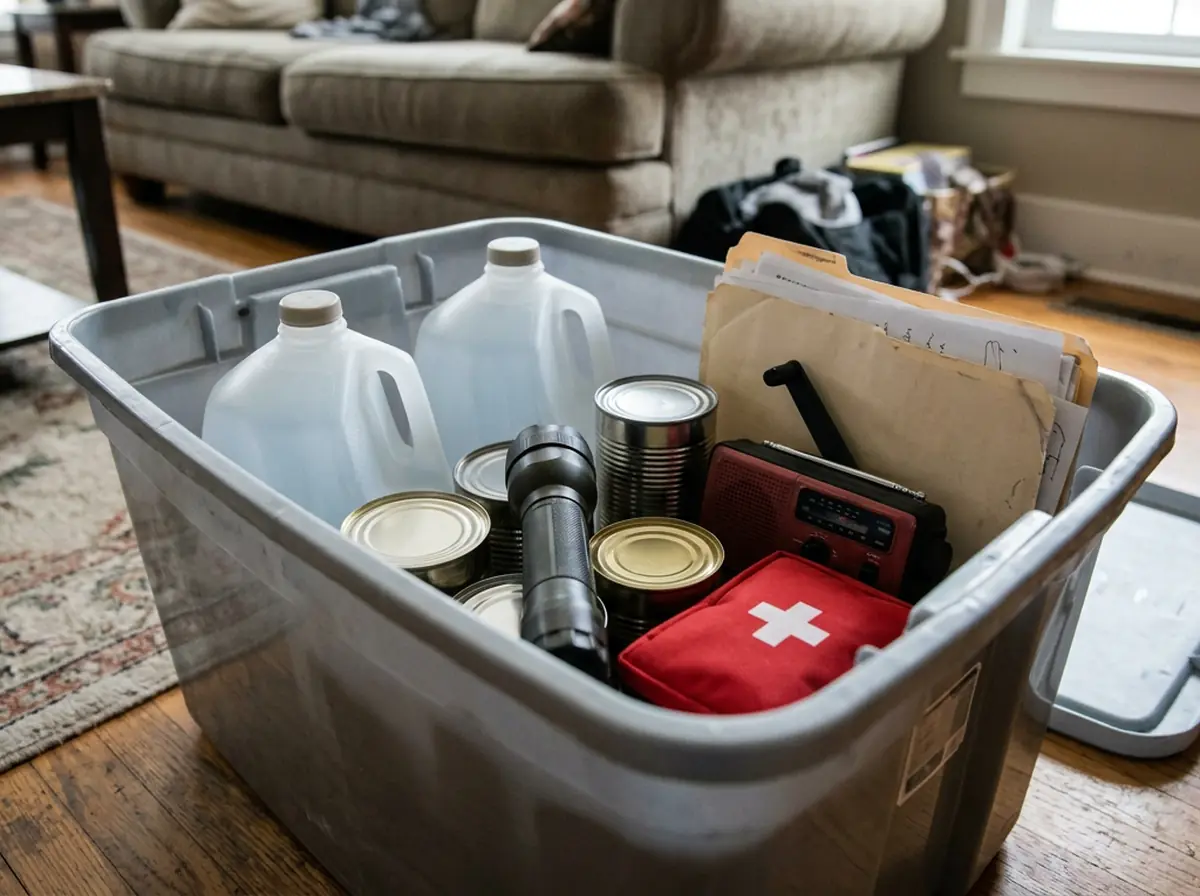
The basics first: water, food, light, radio, first-aid kit and papers
- WaterOne gallon (about 4 liters) per person per day, for several days. It is the first thing Ready.gov and the American Red Cross ask for.
- FoodFood that will not spoil, for several days. Check the dates and replace what expires.
- Light and radioA flashlight with spare batteries and a battery-powered or hand-crank radio, with weather alerts if you can. Add your phone with its chargers and a backup battery.
- Health and papersA first-aid kit, a whistle, prescription medicines for several days (the Red Cross asks for seven), copies of your documents and some cash.
What only your family needs comes next: once you have the basics, add what each person in the home needs, such as babies, older adults or pets.
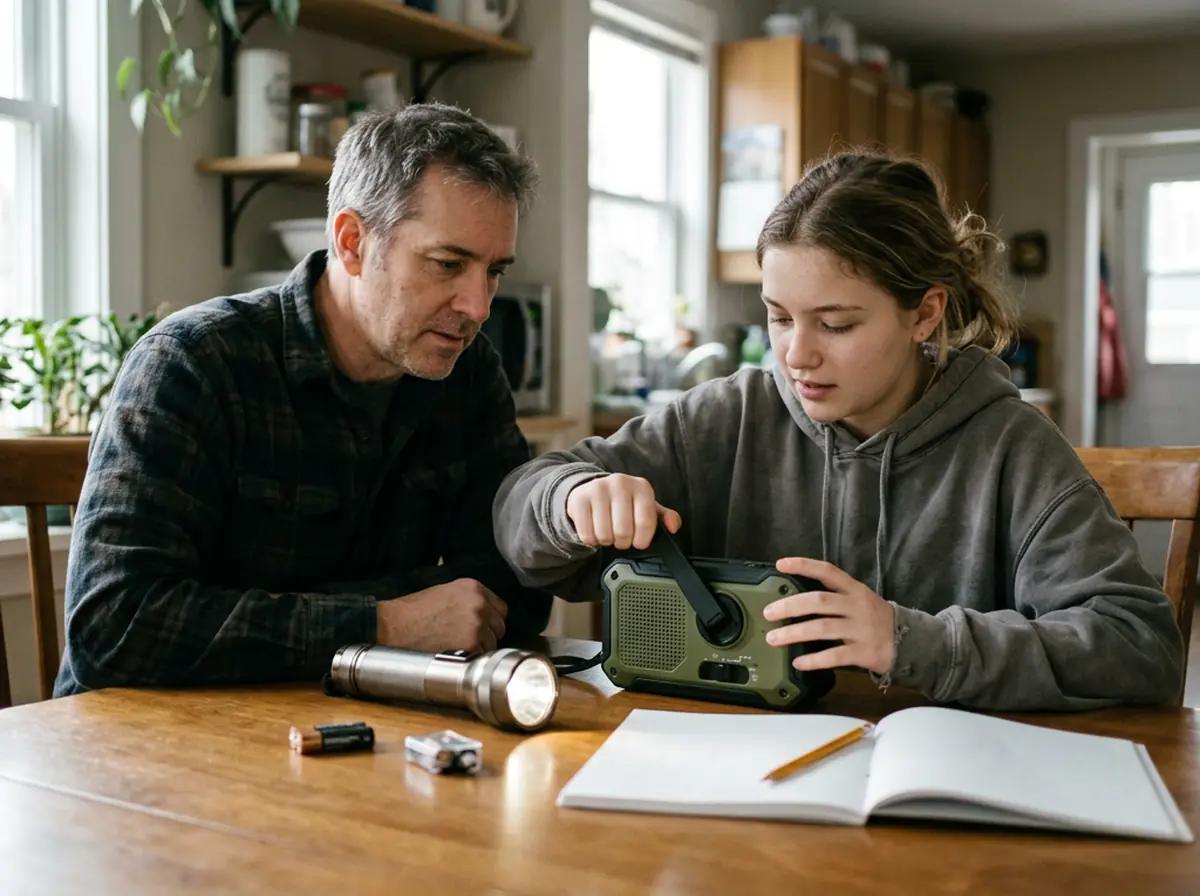
Practice what you have: test it, review it and renew it
- Test your gearTurn on the flashlight, the radio and the charger, and open the first-aid kit. Owning the gear is half the job; knowing how to use it is the other half.
- Learn firstThe Army manual insists on learning the basic skills now, not when you are already in the emergency, and on checking what gear you have and what condition it is in.
- Practice the planPractice evacuating with the kit and the route twice a year, and make sure everyone knows where the kit is.
- Review every yearReplace what has expired and review your family's needs again at least once a year.
Practice reduces fear: according to the Army manual, training reduces fear of the unknown and builds confidence.
Check what you already have
0 of 5 · Saved only on this device.
- Buying expensive gear before having water, food and light.
- Storing gear without testing it or learning to use it.
- Taking the rule of 3 as an exact figure.
Sources: US Army survival manual · ch. 1, survival and priorities · American Red Cross · supplies for an emergency kit · American Red Cross · make a plan · Ready.gov · build an emergency kit · The Ten Essentials · the ten essentials