HomeStage 3 · In the fieldGuide to using and sharpening a knife safely
By Global PrepperUpdated 5 official sourcesHow we make the guides
Stage 3 · Guide to using and sharpening a knife safelyKnife: use it, sharpen it and care for it safely
A sharp knife that is used well is safe; one that is dull or used badly is not. Three steps: carry it with care, cut away from yourself and keep it sharp.
- A sharp knife is safer than a dull one: it needs no force and does not slip.
- Cut away from yourself and from others, never toward your body.
- Nobody within arm's reach when you open it.
- If it falls, don't catch it: step back.
Carry it closed and look around you
A knife is a tool, not a toy. Before you use it for real, learn how yours opens, closes and locks, and practice without cutting anything.
- Closed or sheathedCarry a folding knife with the blade closed and a fixed-blade knife in its sheath. A kitchen knife is carried with the point toward the floor and the edge away from your body.
- Look around youBefore you open it, make sure nobody is within reach of your arm. If someone steps into that space, stop cutting.
- Check the bladeIf the blade does not lock open, do not press in a direction that could close it on your fingers. Do not use a knife with a damaged blade or handle.
- Pass it with careDo not hand it to someone directly: set it on a table for them to pick up.
Only for cutting. Do not use it to hammer, chop by striking or throw, and do not take it to places where knives are not allowed, such as schools.
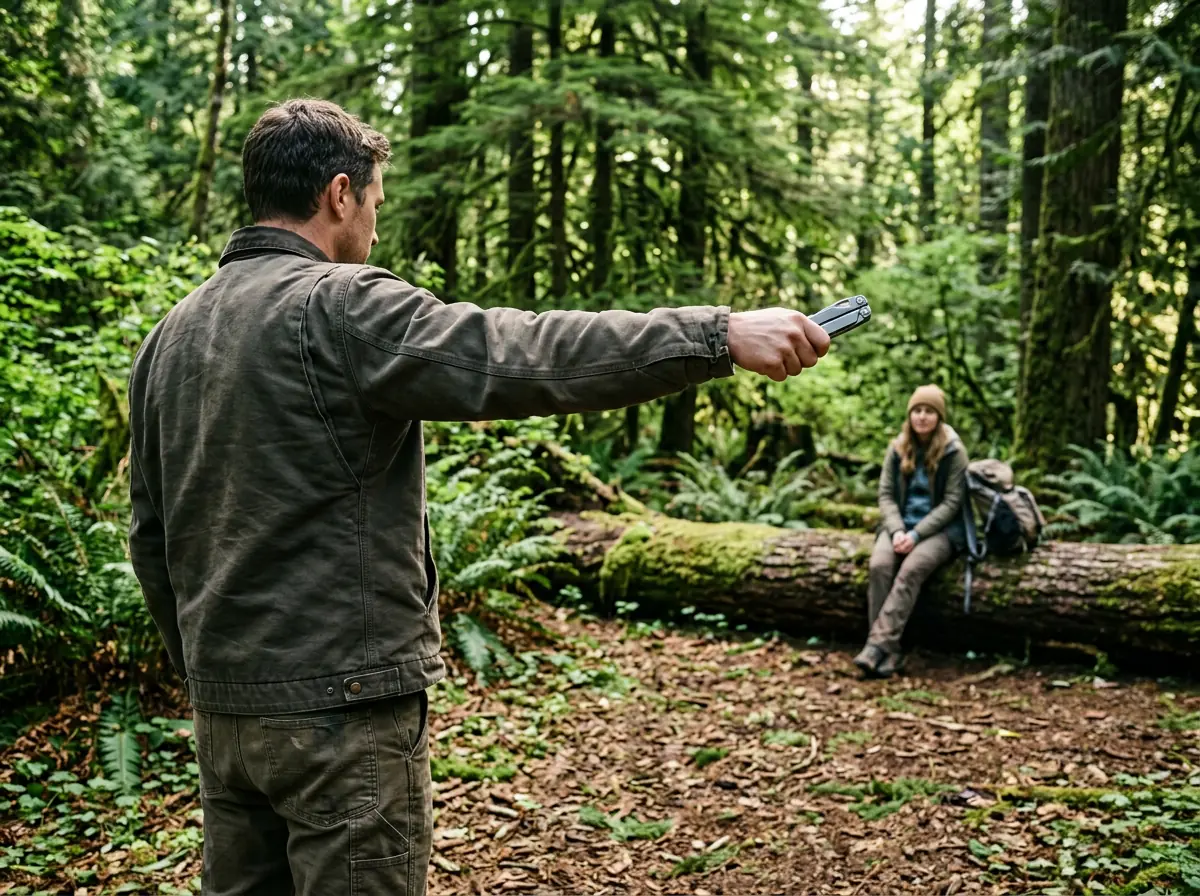
Cut away from yourself
Before every cut, ask yourself where the knife will go if it slips. If the answer is toward you or toward someone else, change your position.
- Away from your fingersAlways cut in the direction away from your fingers and your body, never toward yourself.
- On a boardIf the food is round, cut it in half first and rest it on its flat side so it does not roll.
- Fingers curled backWith the hand that holds the food, curl your fingertips back toward your palm.
- If it falls, let itDo not try to catch a falling knife: step back so it does not land on your feet or bounce.
A dull knife is the dangerous one: it needs more force and it slips. If you have to press hard to cut, sharpen it first.
- If you cut yourself, press hard with gauze or a clean cloth and hold the pressure for at least 5 minutes before looking. If it bleeds heavily, call emergency services. The first aid guide explains how to stop bleeding.
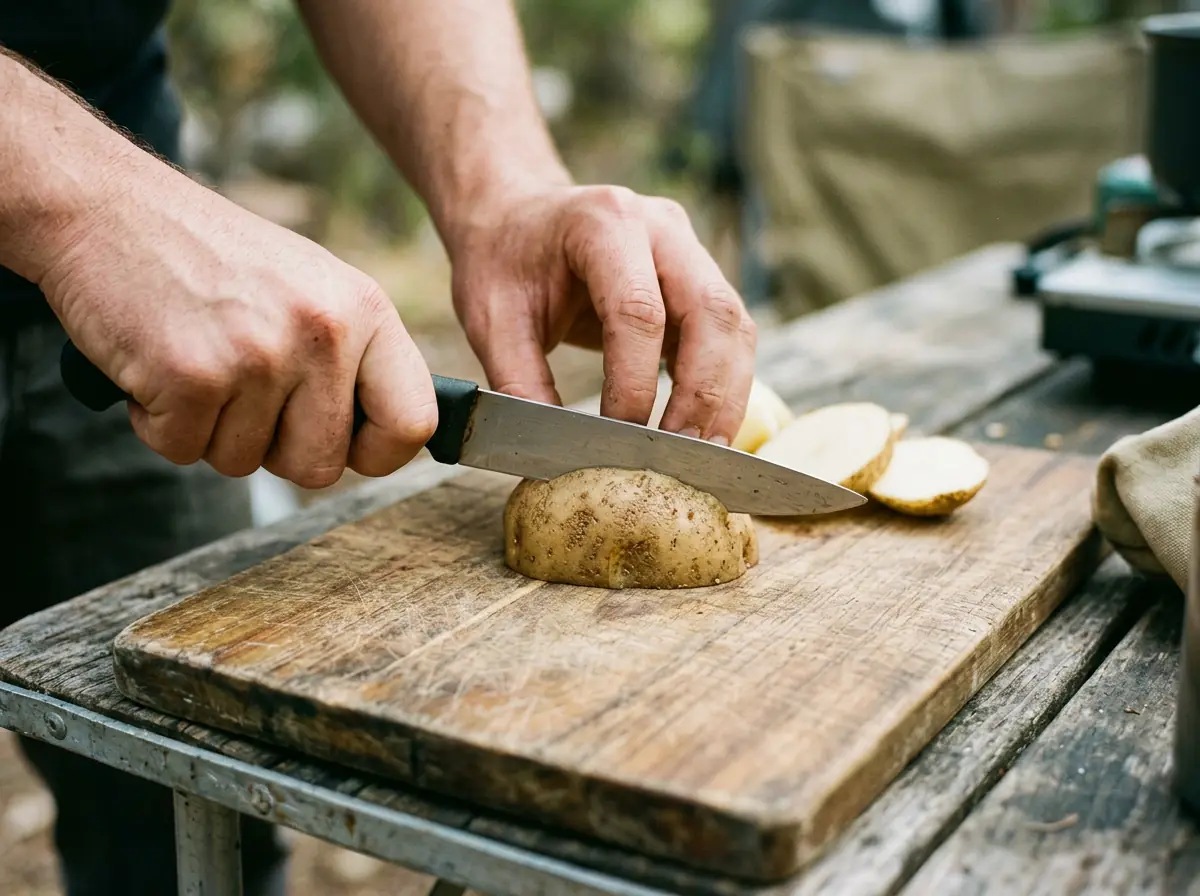
Sharpen it and care for it
A sharp knife cuts with less force, so it slips less. If you sharpen it often, a few light strokes are enough.
- Hone the bladeTo keep the edge, hone the blade with a honing steel or a pull-through sharpener. Do not sharpen serrated knives.
- Stone and angleWith a sharpening stone, hold the blade at the angle the maker recommends, or between 10° and 15° on the stone, and do not change it during the strokes.
- Away from your bodyMove the blade over the stone in the direction of the edge, always away from your body. Then turn it over and repeat on the other side.
- Dry and oilIf it gets wet, dry it well. Put a light coat of oil on the blade and on the moving parts, and wipe off the excess. Do not take it apart.
Do not leave a knife in a sink full of water: you may forget it is there and cut yourself. Wash it right away and store it closed, in its sheath or in a knife block.
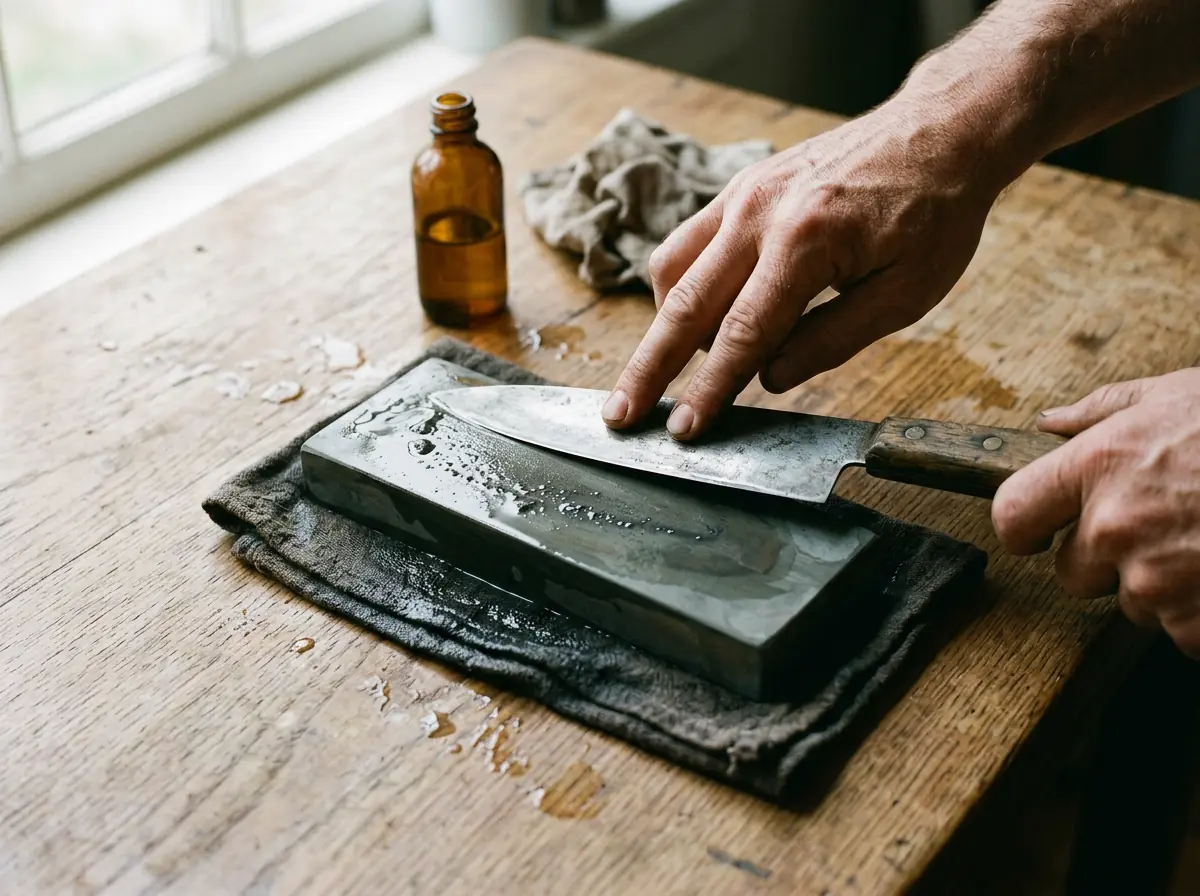
Check what you already have
0 of 5 · Saved only on this device.
- Using the knife to hammer, pry or chop by striking.
- Going on cutting with a dull knife, pressing harder.
- Trying to catch a falling knife, or leaving one in a sink full of water.
Sources: AKTI · My First Knife: safety, use, care and sharpening · Scouting America · knife safety · Mississippi State University · how to use a kitchen knife · California State University, Chico · knife handling tips · Stop the Bleed · how to stop severe bleeding