HomeStage 2 · Away from homeKits away from home: car, work and what you carry on you
By Global PrepperUpdated 7 official sourcesHow we make the guides
Stage 2 · Kits away from home: car, work and what you carry on youKits away from home: car, work and what you carry on you
An emergency can catch you in the car, at work or on the street, far from your go-bag. Three steps so that what you need is with you, and what to do if you get stranded.
- Car: so you are seen, so it starts, and water, food and warmth for hours.
- Tank: full, or at least above half.
- Stranded: stay in the car, make yourself visible and keep the tailpipe clear.
- Work: for 24 hours, with comfortable shoes and a phone with charge.
Car kit: be seen, get moving and last for hours
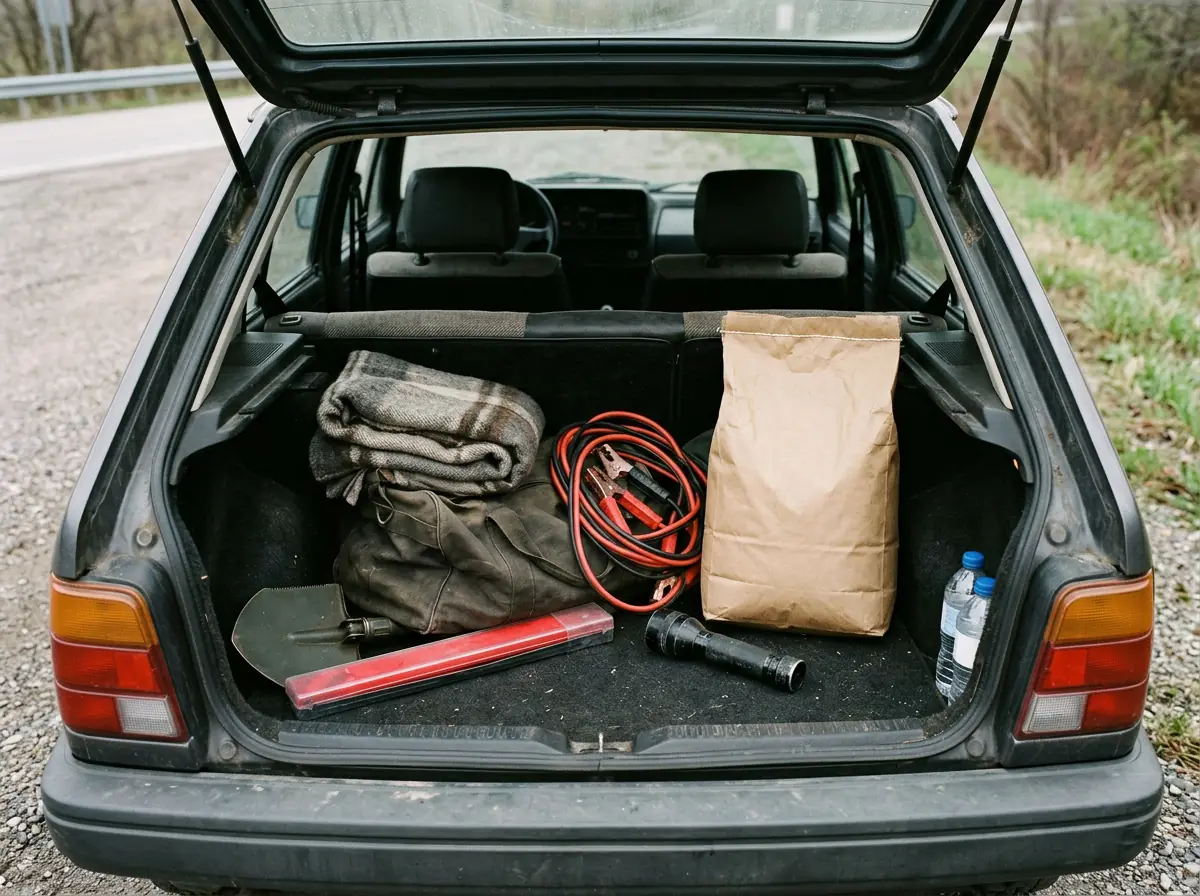
- So you are seenFlares or reflective triangles so other drivers see you, especially at night, and a flashlight with spare batteries. A whistle can be used to call for help.
- So it starts and keeps goingJumper cables, a spare tire with jack and wrench (or a repair kit with an inflator), and a shovel with sand or cat litter for traction on snow, mud or ice.
- To last for hoursWater and food that will not spoil (the Red Cross asks for at least 3.8 liters (1 gallon) of water per person for 24 hours), blankets, warm clothing and a first-aid kit.
- To call for helpA car charger and a power bank for your phone, a battery-powered or hand-crank radio and a paper map.
Keep the tank full in case of an evacuation or a blackout; the National Weather Service asks for at least more than half. In winter it also keeps the fuel line from freezing.
If you get stranded: stay put, be seen and watch for carbon monoxide
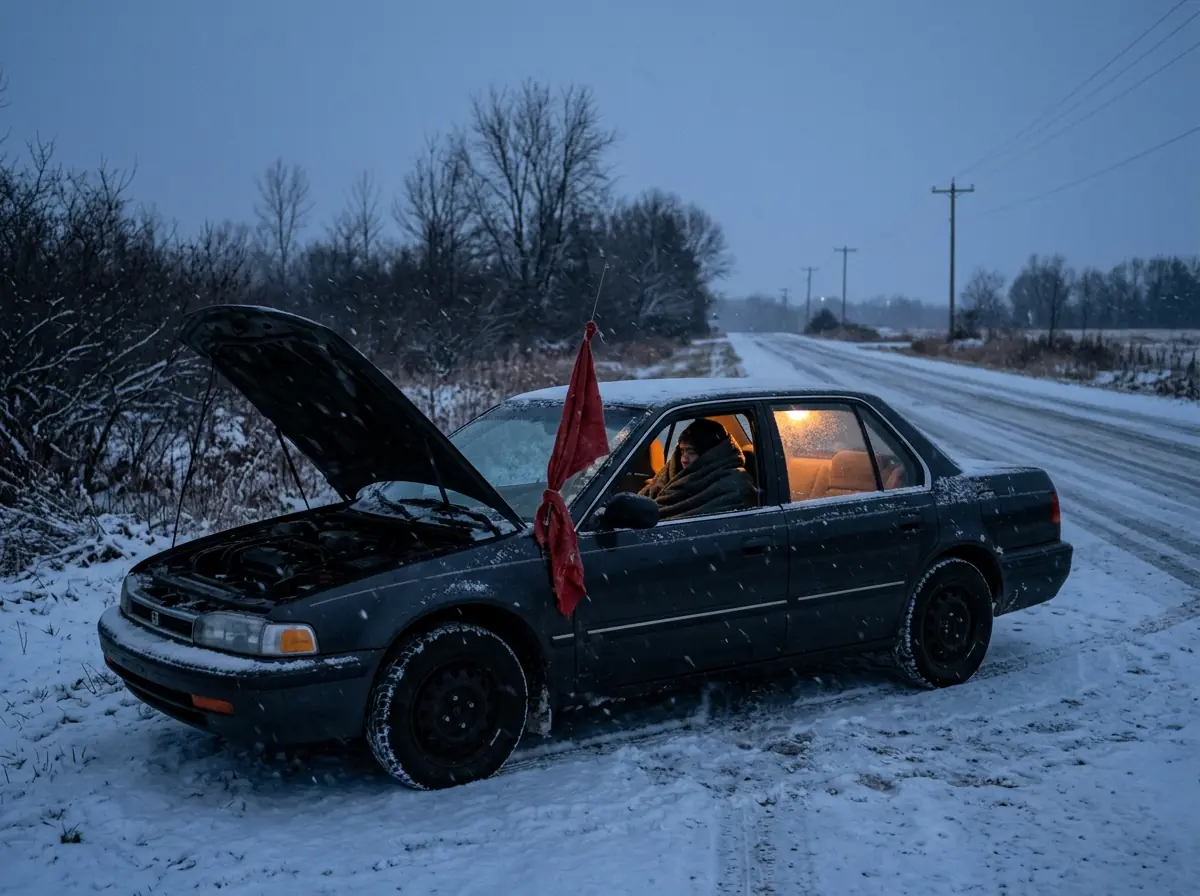
- Stay with the carLeaving on foot disorients you quickly in wind and snow. Only leave if you can clearly see a sturdier, warmer shelter.
- Be seenAt night, turn on the interior light while the engine is running, tie a bright cloth, preferably red, to the antenna or the door and, once the snow stops, raise the hood.
- Heat without poisoning yourselfRun the engine about 10 minutes every hour to warm up and charge your phone, with a window slightly open, and keep the tailpipe clear of snow.
- Bundle up and moveWrap your whole body, including your head without blocking your breathing, in clothing, blankets and sleeping bags, and move your arms, legs, hands and feet to keep the blood circulating.
15 cm (6 inches) of water can make you lose control or stall the car, and 30 cm (1 foot) floats many of them: do not drive through a flooded street.
At work and on you: 24 hours, a phone with charge and the essentials
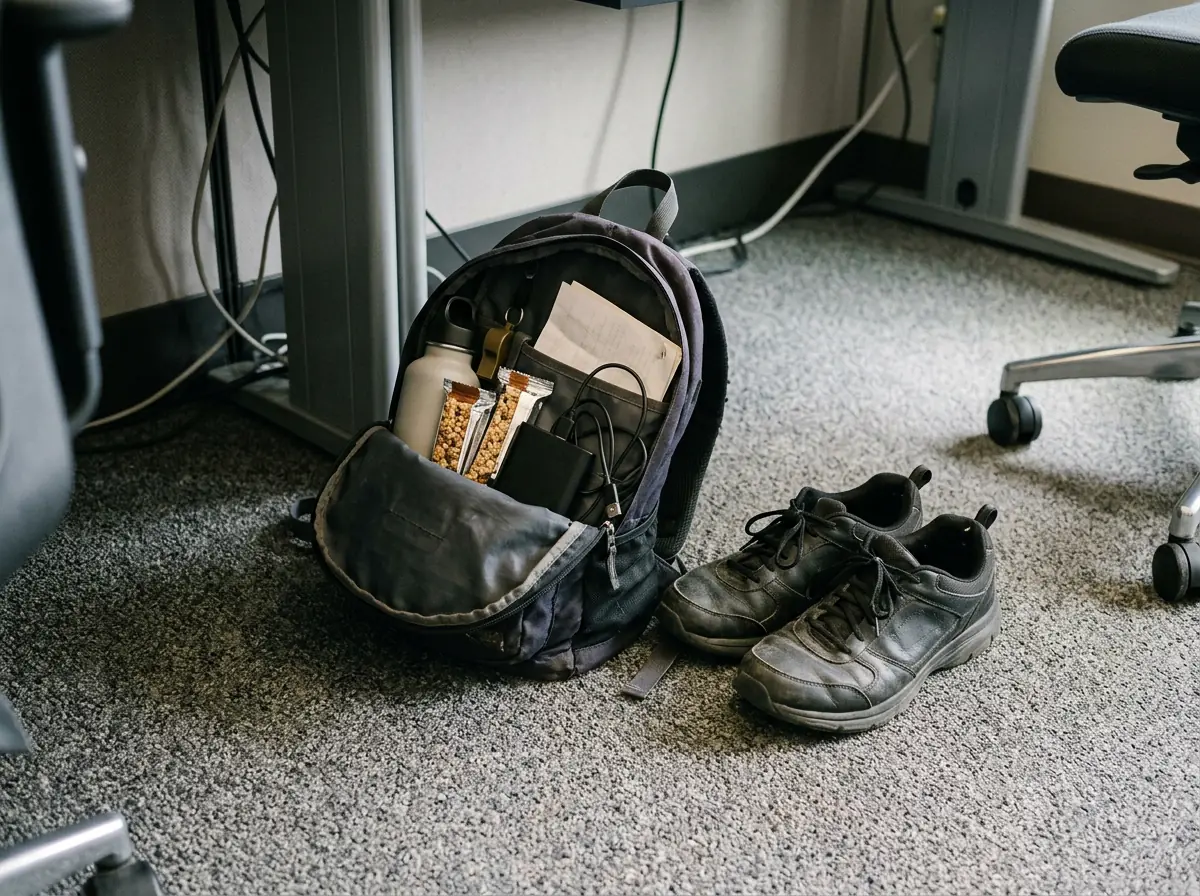
- At workBe ready to stay at least 24 hours: food, water, medicines and comfortable walking shoes, in a grab-and-go case.
- What you always carryA phone with a charger or power bank, some cash, a paper list with the contacts of your family and emergency numbers, and copies of your important documents.
- If you have to leaveThe Red Cross asks for food and water for 3 days if you have to evacuate, at 3.8 liters (1 gallon) of water per person per day, and a 7-day supply of medicines.
- So they do not go stalePack everything in airtight plastic bags inside one or two containers that are easy to carry, replace what has expired and review your needs every year. Update the photos of your family on your phone every 6 months.
Make sure everyone in your home knows where the kit is and what the plan is, and practice evacuating twice a year.
Check what you already have
0 of 5 · Saved only on this device.
- Leaving a stranded car on foot in a storm.
- Running the engine with the tailpipe blocked by snow.
- Driving through a flooded street.
Sources: Ready.gov · build an emergency kit · Ready.gov · vehicle safety · US National Weather Service · what to do in a winter storm · US National Weather Service · winter survival kit · CDC · how to drive in winter · American Red Cross · 10 essential items for a car kit · American Red Cross · get a kit, make a plan, be informed