HomeStage 2 · Your home without servicesEmergency radio: get alerts and communicate without a phone
By Global PrepperUpdated 6 official sourcesHow we make the guides
Stage 2 · Emergency radio: get alerts and communicate without a phoneEmergency radio: what to choose, how to program it and which handheld radios to use
When the internet and cell service fail, a battery radio keeps receiving alerts. Three steps: choosing it, programming it and knowing what to do about handheld radios.
- Have: a battery-powered or hand-crank radio with weather alerts.
- Program: your county, to get only the alerts for your area.
- Maintain: spare batteries and a charged backup battery.
- Check: whether your handheld radios need a license.
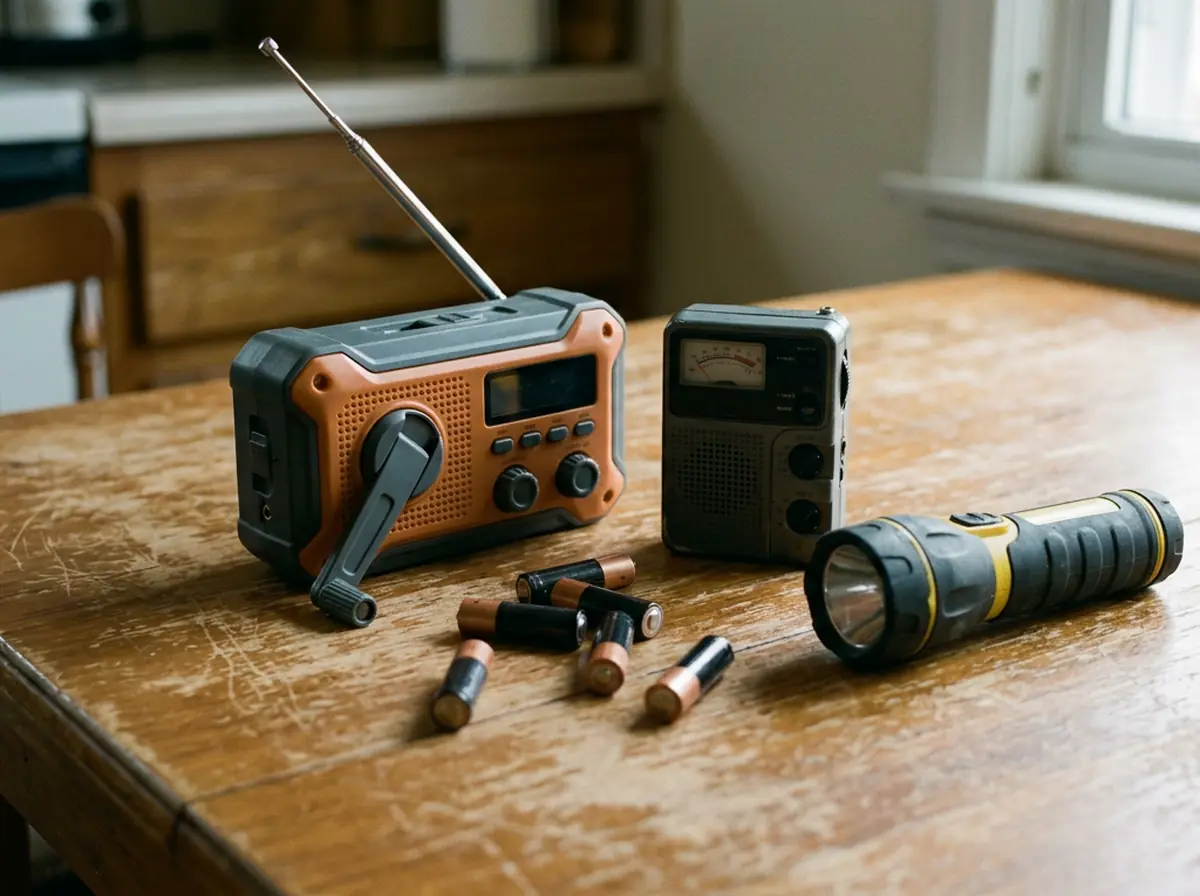
Which radio to choose: battery-powered or hand-crank, with weather alerts
- A radio in the kitReady.gov and the American Red Cross ask for a battery-powered or hand-crank radio in the kit, with weather alerts if possible.
- NOAA weather radioIn the US, NOAA Weather Radio broadcasts National Weather Service alerts and other hazard alerts nonstop from more than 1,000 transmitters, on seven frequencies from 162.400 to 162.550 MHz.
- Look for "Public Alert"Choose a model with the Public Alert logo: it has a 1050 Hz alert tone that sounds even with the audio off, and a backup battery. They cost between 20 and 200 dollars.
- Antenna and batteriesIf the signal is poor, look for a model with an external antenna jack. Keep spare batteries or a hand-crank radio.
Outside the US: NOAA Weather Radio covers US territory only. Find out what radio alert service your country has and on which frequencies.
Programming it: your county, the battery and the alerts
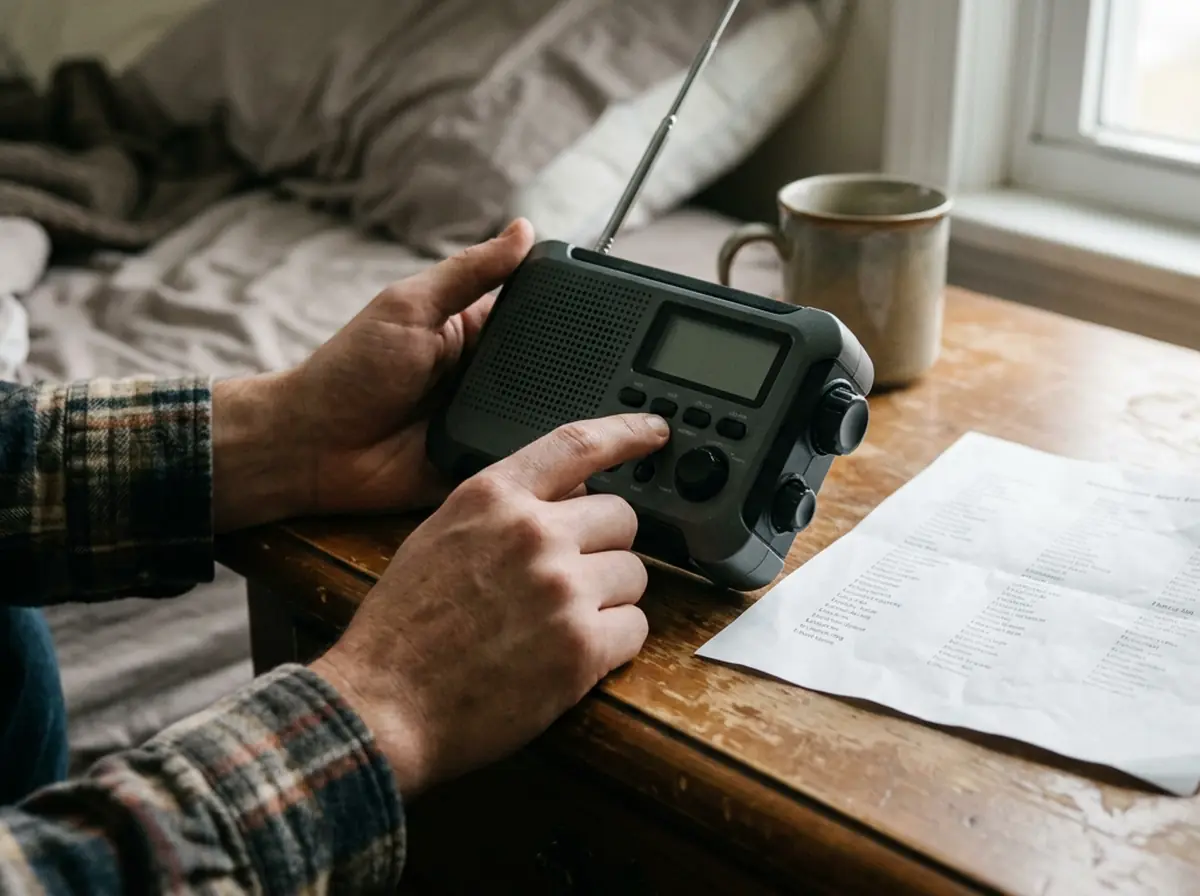
- Find your modelLook up the brand and model in the National Weather Service list of manuals; if it is not there, check the manufacturer's website.
- Your county codeWith SAME, the radio responds only to alerts for the areas you choose. County codes are at weather.gov/nwr/counties.
- Turn off what does not concern youSome units let you turn off alarms for events that do not affect you, such as coastal flooding if you live far from the sea.
- Plugged in, with backupTo preserve the backup battery, leave it plugged into the wall, except on portable units. That way it keeps alerting you in a blackout.
A wrong code leaves you without alerts: if you program another county, you will not hear the alerts for your area. Check it at weather.gov/nwr/counties.
Handheld radios: FRS, GMRS and their rules
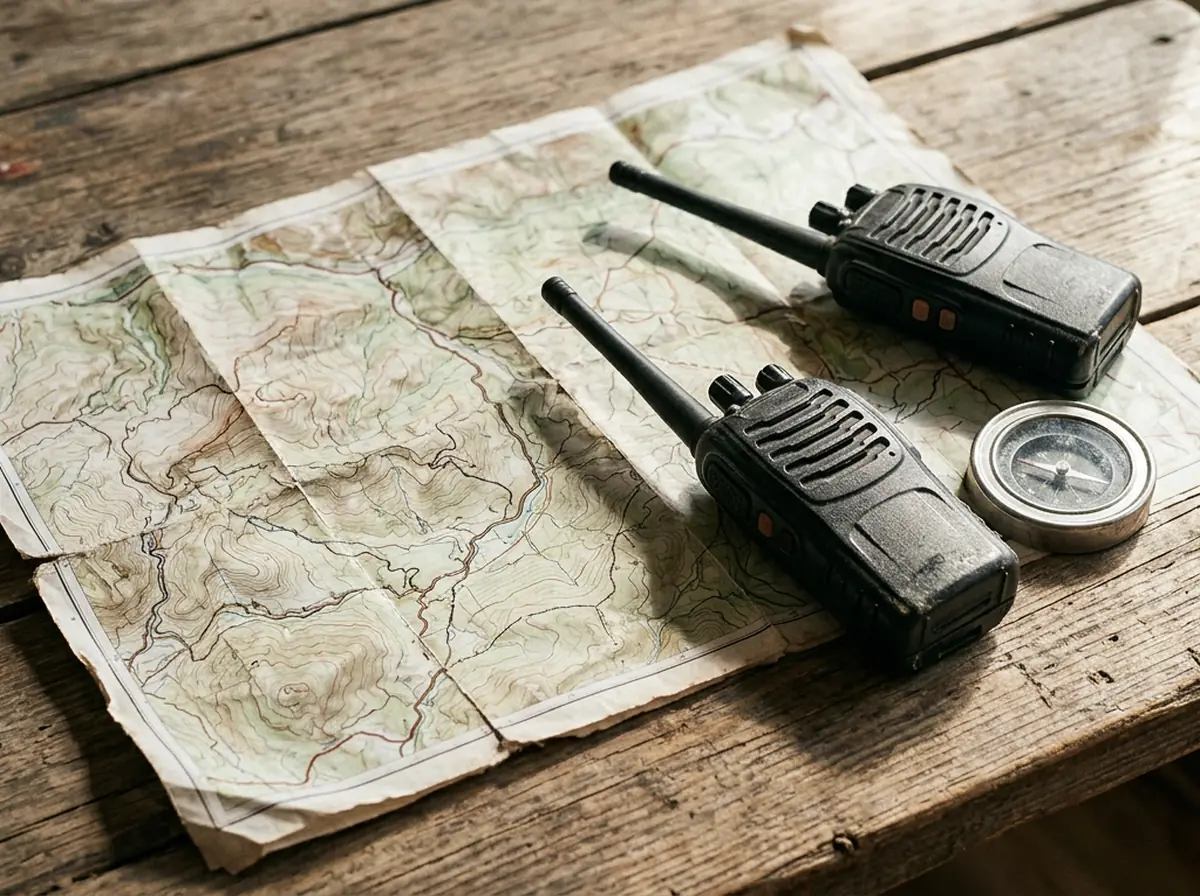
- FRS radiosThey are for talking over short distances with your family or group. In the US they need no individual license if you follow FCC rules, and they have 22 channels.
- Power and rangeChannels 1 to 7 and 15 to 22 allow up to 2 W; channels 8 to 14, only 0.5 W, for less than half a mile.
- GMRS radiosThey reach farther, from 1 to 25 miles, and require an FCC license for people 18 and older. It lasts 10 years and your family can use it.
- Test them firstTest as a family how far they carry in your area; real range changes with terrain and buildings.
These rules are for the US: in another country, ask its telecommunications authority which radios need a license and on which frequencies they are used.
Check what you already have
0 of 5 · Saved only on this device.
- Relying on the phone as the only way to get alerts.
- Leaving the radio without a county programmed or with a wrong code.
- Buying handheld radios without checking license, power and range.
Sources: Ready.gov · build an emergency kit · American Red Cross · supplies for an emergency kit · US National Weather Service · NOAA Weather Radio · US National Weather Service · how to program your weather radio · FCC · Family Radio Service (FRS) · FCC · General Mobile Radio Service (GMRS)