HomeStage 3 · Learn a tradeBasic car mechanics: check, jump-start and change a tire
By Global PrepperUpdated 3 official sourcesHow we make the guides
Stage 3 · Basic car mechanics: check, jump-start and change a tireBasic car mechanics: check, jump-start and change a tire
A car that starts and rolls is a way out in an emergency. Three steps: check tires and fluids, jump-start with cables and change a tire safely.
- Pressure: once a month, with the tires cold.
- Cables: red to positive; the last black one to unpainted engine metal.
- Tire: flat ground, brake on and lug nuts loosened before lifting.
- Jack: it never holds the car: don't go under it.
Check your car: tires and fluids
- PressureCheck the pressure of all tires, including the spare, at least once a month and with the tires cold: the car should have been parked for three hours.
- How much pressureUse the pressure the manufacturer lists on the label on the driver's door frame or in the manual, not the one written on the tire.
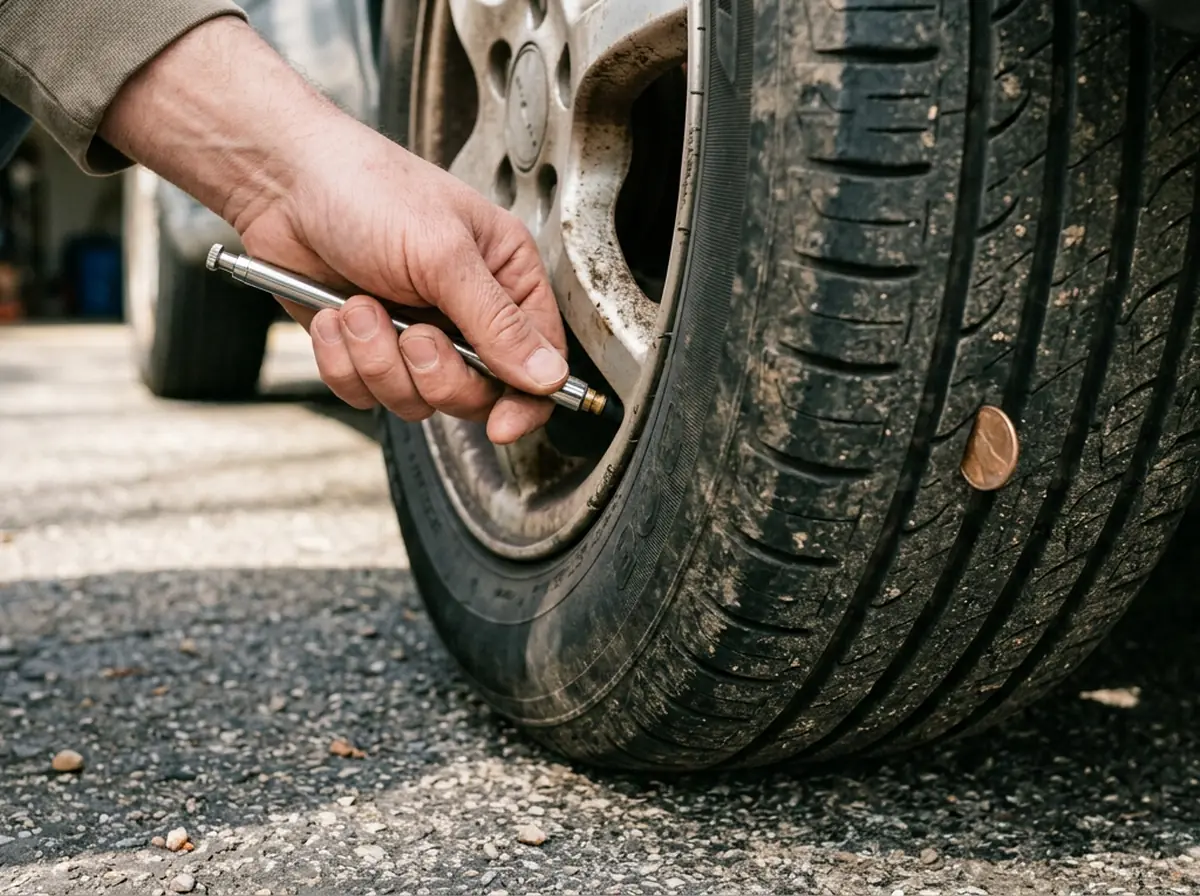
- TreadAt 2/32 of an inch (1.6 mm) of tread they are no longer safe. Put a US penny in the groove: if you can see the top of the head, replace them.
- FluidsPer your manual, check brake, steering, washer, coolant and transmission fluid, and the engine oil often. Before a trip, check belts, hoses and clamps.
A tire pressure light that stays on: at least one tire is very low. Check them as soon as possible; the light doesn't replace the monthly check.
Jump-start with cables: the order matters
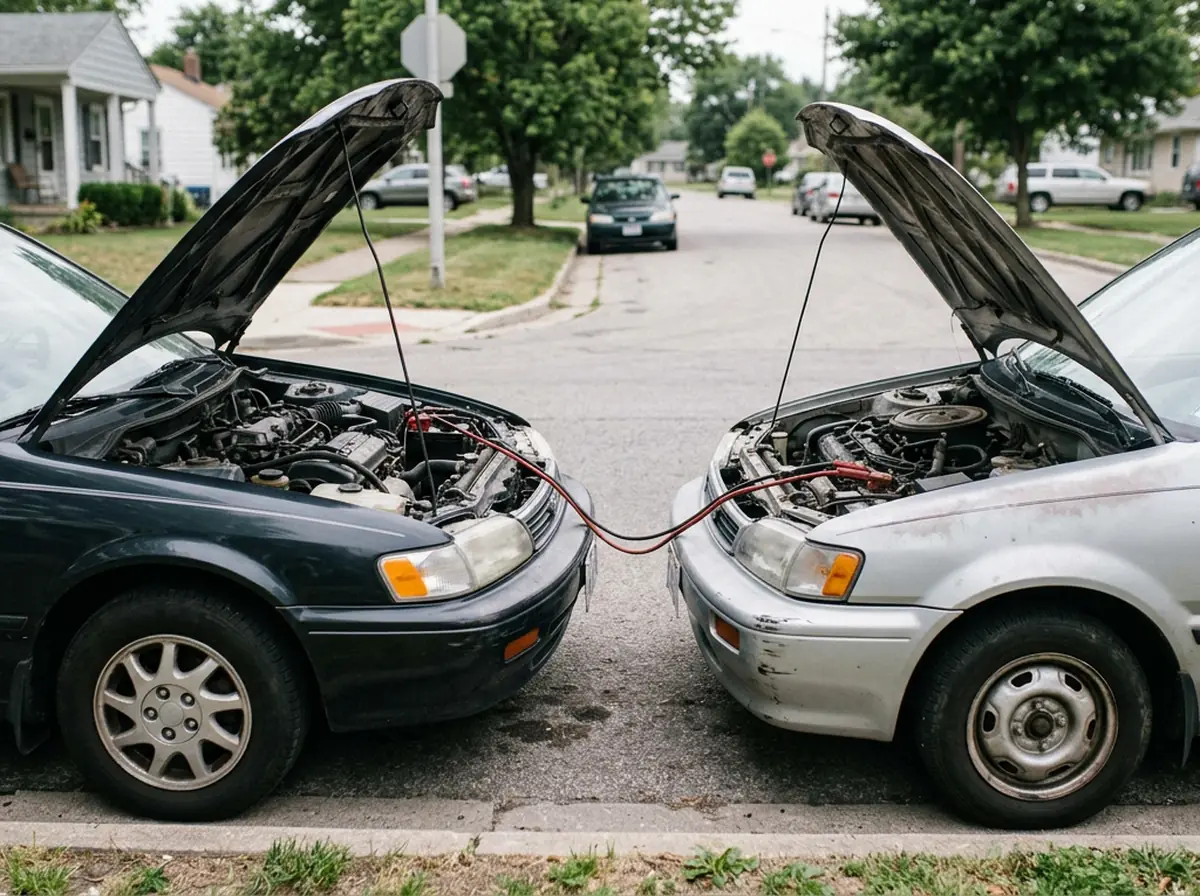
- Position the carsBring them close enough for the cables to reach, but not touching, and don't let the cable clamps touch each other.
- Red to redConnect one red clamp to the positive (+) terminal of the dead battery and the other to the positive (+) of the good battery.
- Black to groundConnect one black clamp to the negative (−) of the good battery and the other to an engine bolt or unpainted, non-moving metal.
- Start and removeStart the good car and then the dead one. Remove the cables in reverse order, starting with the black clamp from the engine. Keep the engine running at least 30 minutes.
Never connect the black clamp to the negative of the dead battery: it can cause an explosion.
Change a tire: flat ground and loosen the nuts first
- Stop safelyIf there is heavy traffic or the ground is unsafe, don't change it: drive slowly to a safer place. Turn on your hazard lights.
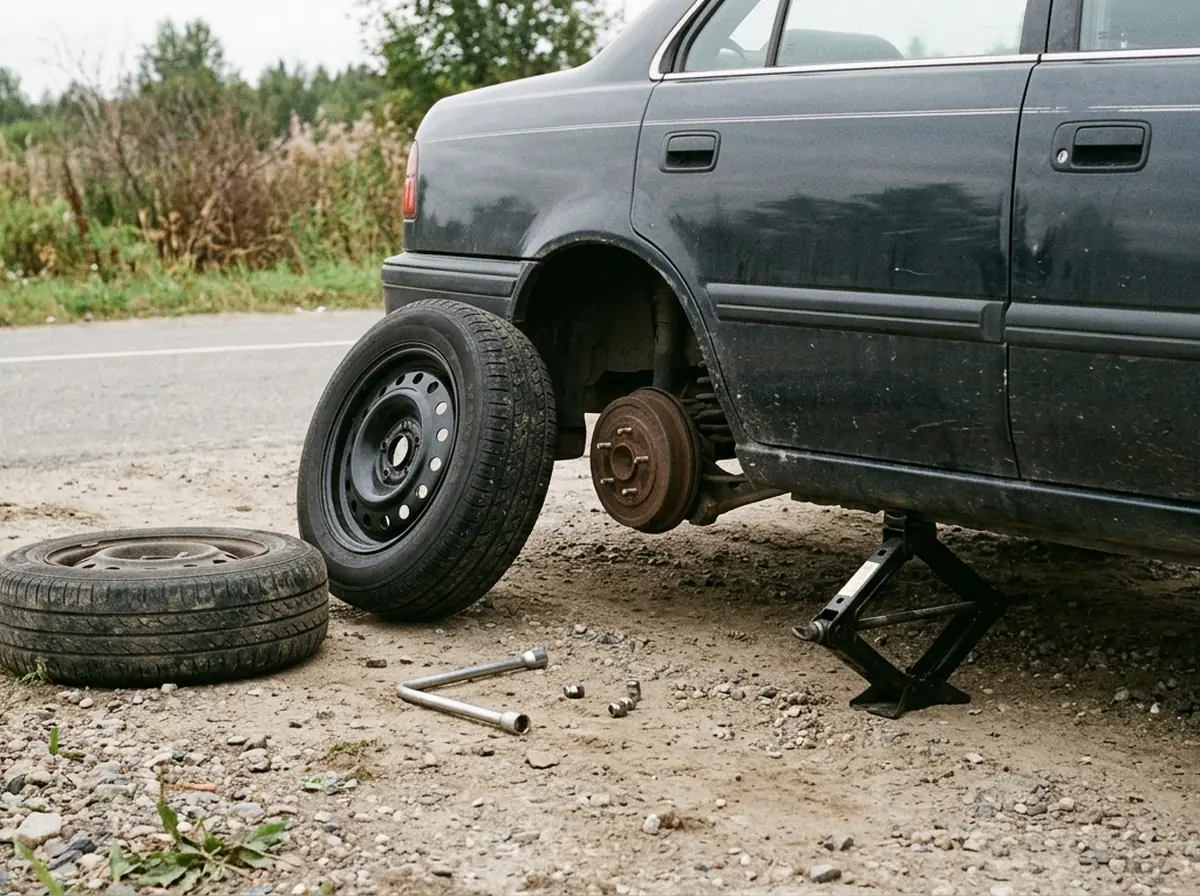
- Brake and groundSet the parking brake and put the lever in reverse (manual) or park (automatic). The jack and the car must be on firm, level ground.
- Loosen firstLoosen the lug nuts slightly before raising the car, because with its weight on it is harder. For the rest, follow your car's manual.
- Never underneathThe jack does not hold the car: block it and don't go under it. Keep everyone out of the car while you lift it.
The spare is an emergency way out: don't use it in place of worn tires, and check its pressure every month.
Check what you already have
0 of 5 · Saved only on this device.
- Connecting the black cable to the negative of the dead battery.
- Changing a tire beside a busy road or on a slope.
- Going under a car held up only by the jack.
Sources: NHTSA · tire safety · Ferris State University · if your vehicle breaks down · OSHA · hand and power tools (publication 3080)